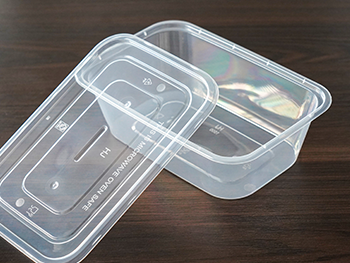
A clear thickened disposable plastic 1500 rectangular container is a single-use food packaging vessel made from high-clarity plastic resin, featuring a rectangular footprint and a nominal capacity of 1500 milliliters (1.5 liters). The word "thickened" refers to a heavier wall gauge than standard thin-wall disposables, giving the container increased rigidity, puncture resistance, and load-bearing performance while remaining fully single-use and disposable.
This container type sits at the intersection of three packaging trends: the demand for premium presentation in takeout and food delivery, the need for structural durability in high-volume foodservice operations, and the growing preference for recyclable packaging materials. Unlike flimsy foam or thin-film containers, the thickened clear plastic body protects hot, cold, greasy, and liquid-heavy meals without flexing or leaking during transit.
These containers are most commonly manufactured from PET (polyethylene terephthalate), PP (polypropylene), or rPET (recycled PET). They are widely used in restaurants, cloud kitchens, catering services, supermarkets, meal-prep businesses, and food manufacturing facilities that require a uniform, transparent, stackable, and brand-friendly vessel for portioned meals.
The 1500 ml rectangular format is especially popular because it is large enough for generous main courses, family-sized portions, salad bowls, fruit platters, and bento-style lunches, yet compact enough to fit standard delivery bags and refrigeration shelves. When paired with a matching lid — typically a flat, domed, or vented snap-on cover — it forms a secure, spill-resistant package suitable for both cold and hot food.
Why the 1500 ml Rectangular Format Matters
The 1500 ml size represents a practical midpoint in the disposable container spectrum. Smaller 250–750 ml units serve single appetizers, side dishes, and desserts, while 2000–4000 ml units are reserved for catering trays and family feasts. At 1.5 liters, the clear thickened disposable plastic container accommodates a complete meal with protein, starch, and vegetables, making it the default choice for meal delivery, meal prepping, and single-serving retail packaging.
The rectangular shape offers several quantifiable advantages over round or square alternatives:
Optimized shelf and bag utilization. Rectangular containers pack together with minimal wasted space, allowing more units per delivery bag, per refrigerator shelf, and per shipping carton. This directly reduces logistics cost and carbon footprint per portion.
Efficient stacking and nesting. The straight walls and consistent footprint allow secure vertical stacking, both during storage and after filling, which improves warehouse density and countertop organization.
Larger usable surface area. A rectangular footprint provides more flat top area than a round container of equal volume, which is valuable for labeling, branding, and stable lid seating.
From a user experience standpoint, the rectangular tray is easier to hold, easier to portion visually, and easier to arrange in a delivery courier's hot box. These practical properties explain why the 1500 ml rectangular clear container has become a staple SKU in disposables catalogs across North America, Europe, and Asia.
Primary Materials Used
PET (Polyethylene Terephthalate)
Clear PET is the most common material for this container because it offers crystal-clear transparency, good impact strength, and a glass-like premium appearance. PET is lightweight, shatter-resistant, and widely accepted in single-stream recycling programs. Clear PET containers display food attractively, which is a decisive factor for restaurants and retailers that want the product itself to drive appetite appeal.
Key traits:
PP (Polypropylene)
Polypropylene is chosen when the application demands heat resistance and microwave/oven versatility. PP tolerates higher temperatures than PET without warping, making it the preferred option for hot soups, steamed dishes, and microwave-reheated meals. Although PP is slightly less transparent than PET, modern clarified PP grades deliver very good clarity while retaining toughness and a high melting point.
Key traits:
rPET (Recycled PET)
Increasingly, manufacturers produce these containers with food-grade rPET derived from post-consumer beverage bottles. rPET reduces reliance on virgin resin, lowers embodied carbon, and supports closed-loop circular packaging. Blends of virgin and recycled resin allow brands to meet recycled-content targets while preserving clarity and mechanical strength.
Key traits:
Additives and Enhancements
Depending on the intended use, resin may be compounded with clarifying agents, antioxidants, UV stabilizers, and anti-fog additives. An anti-fog coating or masterbatch is especially important for cold foods and refrigerated display, because it prevents condensation droplets from clouding the transparent lid and hiding the contents. Oxygen scavengers can extend shelf life for oxygen-sensitive items such as fresh-cut produce and ready-to-eat meals.
Key Features and Advantages of a Thickened Clear Container
High Structural Integrity
The defining trait of a thickened container is its thicker sidewall and base, which deliver several measurable benefits:
Crystal-Clear Presentation
Clarity is a primary selling point. The transparent body lets customers see the exact portion, freshness, and quality before opening. This "see-through" merchandising is proven to boost perceived value and satisfaction in takeout, retail grab-and-go, and meal-kit segments. Clear containers also allow kitchen staff to identify contents at a glance, improving workflow speed in high-volume operations.
Secure Lid Systems
Most 1500 ml rectangular containers pair with a snap-on or press-on lid engineered for a tight, four-corner seal. Common lid variations include:
The combination of a thickened rim and a well-designed lid creates a spill-resistant, stackable, re-sealable package.
Temperature Versatility
Depending on the resin, the container can handle refrigerated, freezer, hot-hold, and microwave conditions. Many PP models are safe for both microwave reheating and short-term freezing, while PET models excel in chilled display and cold-chain distribution. This flexibility lets a single SKU serve multiple menu items and dayparts.
Grease and Moisture Resistance
Both PET and PP are hydrophobic and oil-tolerant, meaning they do not soften, stain, or disintegrate when contacting salad dressings, gravies, curries, oils, or sauces. This resistance keeps the container rigid and clean throughout the meal's life cycle.
Branding and Labeling Surface
The large, flat lid and smooth sidewalls offer generous real estate for printing, adhesive labels, and lid-branding. Food-service operators can apply logos, allergen information, nutrition claims, and reheating instructions without compromising the seal. Custom-printed or embossed lids strengthen brand recognition and support marketing campaigns.
Stackability and Space Efficiency
Uniform dimensions and consistent flanges allow secure nesting of empty units and stable stacking of filled units. This reduces storage footprint, simplifies dispensing, and improves supply-chain efficiency — a tangible advantage for distributors and operators holding large inventories.
Lightweight and Cost-Effective
Despite the thickened walls, plastic containers remain substantially lighter than glass or ceramic alternatives. Lower weight reduces freight costs, and the single-use nature eliminates washing, sanitizing, and breakage losses. For operators, the cost per serving is predictable and low, especially when purchasing in bulk.
Typical Specifications and Dimensional Reference
While exact dimensions vary by manufacturer, the following reference points describe a standard 1500 ml clear thickened disposable rectangular container. These figures are offered as industry-general guidance and should be confirmed with a supplier's datasheet before specification:
Serving scope: one hearty main meal, a large salad, a family side, or a multi-compartment bento portion
Note that capacity is usually measured to the rim and may be expressed as "1500 ml" on the brim fill or overflow fill basis depending on the standard used. Operators should match the fill-line volume to their portion program to avoid over- or under-filling.
Common Applications and Use Cases
Food Delivery and Takeout
The single most widespread use is restaurant takeout and third-party delivery. The thickened clear container keeps entrees secure during courier handling, displays the food attractively for the customer, and resists leaks from sauces and marinades. Cloud kitchens and virtual brands favor it because it standardizes plating across many menu items.
Meal Prep and Meal Kits
Meal-prepping services and meal-kit brands rely on 1500 ml containers to portion weekly meals that customers reheat at home. Microwave-safe PP versions are especially common, because consumers expect to heat the container directly. The clear body lets customers confirm freshness and portion size on delivery day.
Retail Grab-and-Go and Deli
Supermarkets, delis, and convenience stores use these containers for salads, fruit bowls, rotisserie sides, and prepared entrées in refrigerated displays. The anti-fog feature and crystal clarity are critical here, because shelf appeal drives purchase decisions in retail.
Catering and Events
Caterers use the rectangular tray to serve plated portions at buffets, corporate events, and institutional dining. The stackability and rigid lid make transportation and on-site service efficient, while the 1500 ml size fits generous single portions or shared sides.
Food Manufacturing and Meal Components
Commercial kitchens and food processors use the container for batch packing, portion control, and cold-chain distribution of sauces, soups, proteins, and vegetables. Consistent dimensions support automated filling, lidding, and labeling lines.
Food Safety, Compliance, and Best Practices
Food-Grade Certification
Reputable manufacturers produce these containers with food-grade resins and manufacture them in compliance with relevant food-contact regulations, including FDA 21 CFR in the United States and EU Framework Regulation (EC) 1935/2004 in Europe. When sourcing, buyers should request declarations of compliance, migration test reports, and certificates of analysis to verify suitability for their intended food type and temperature.
Temperature Limits and Usage Rules
Every resin has defined operating windows:
No container is universal: always validate with the supplier and, where required, conduct migration testing for high-fat, acidic, or alcoholic foods.
Handling and Hygiene
Operators should store containers in a clean, dry environment, protect them from UV exposure and extreme heat, and inspect units for defects before use. Airtight lids should be seated fully around the rim to maintain seal integrity during transport.
Labeling and Reheating Instructions
Because consumers often reheat meals, packaging should carry clear microwave and oven instructions, as appropriate. Misuse — such as heating a non-oven-safe container — can cause warping or melting. Transparent, accurate labeling protects both the consumer and the brand.
Environmental Considerations and the Circular Economy
Recyclability
The main environmental advantage of clear plastic food containers is recyclability. Both PET and PP can be recovered and reprocessed. PET in particular benefits from mature, high-volume recycling infrastructure, and clear, lightly-printed containers yield cleaner recyclate than colored or heavily-printed items.
rPET and Recycled Content
Food-grade rPET now appears in many 1500 ml containers, allowing brands to declare recycled content and reduce virgin-resin consumption. Closed-loop programs recover post-consumer bottles and transform them into new food packaging, cutting embodied carbon and supporting circular economy goals.
Reduce, Reuse, Recycle Guidance
Although these containers are designed as single-use, many are reusable for storage at home when washed appropriately. Operators and consumers are encouraged to:
Weighing Disposable vs. Reusable
The sustainability calculus depends on the operation. Single-use plastic containers can have a lower total footprint than reusable alternatives when washing energy and water are considered, particularly in high-throughput, long-distance delivery settings. A balanced strategy often combines durable packaging for dine-in and recyclable disposables for delivery.
Choosing the Right 1500 Rectangular Container for Your Operation
Define Your Food Matrix
Begin by listing the foods you will package — hot, cold, oily, acidic, liquid-heavy, or dry. This determines the resin (PP for heat, PET for clarity and cold-chain) and whether you need domed, vented, or anti-fog features.
Match Capacity to Portions
Confirm that 1500 ml matches your actual portion program, including sauce and garnish headroom. Overfilling compromises the lid seal; underfilling reduces perceived value.
Evaluate Lid Compatibility
The lid is half the package. Verify that the chosen lid seats firmly, provides the required venting or headroom, and accepts your labeling or printing needs.
Consider the Supply Chain
Assess stackability, carton density, minimum order quantities, and lead times. Uniform dimensions across your SKU range simplify inventory and reduce handling cost.
Verify Compliance Documentation
Request and retain food-contact compliance documents, migration reports, and resin certificates. This is not optional for regulated foodservice and retail channels.
SEO-Focused Keyword Coverage
This guide targets the following high-intent search terms, woven naturally throughout the content:
Conclusion
The clear thickened disposable plastic 1500 rectangular container is a versatile, high-performing packaging workhorse for modern foodservice. Its transparent presentation, durable thickened walls, secure lid systems, temperature flexibility, and recyclability make it the preferred choice for delivery, meal prep, retail grab-and-go, and catering alike. By understanding the materials, specifications, food-safety requirements, and environmental options, buyers can select a container that protects food quality, elevates brand image, and aligns with sustainability goals.
Whether you are a restaurant operator standardizing your takeout program, a meal-prep brand scaling production, or a distributor building a disposables assortment, the 1500 ml clear thickened rectangular container deserves a place in your packaging strategy — balancing presentation, protection, practicality, and environmental responsibility in a single SKU.


 Español
 Pусский
 العربية
 Tiếng Việt

 WhatsApp
 Phone
 E-mail
 Message