
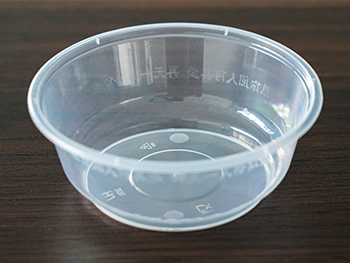
Clear Thickened Disposable Plastic 300 Round Bowl: Industry Overview and Product Guide
The clear thickened disposable plastic 300 round bowl is a staple in the food service and packaging industry, designed for single-serving applications that demand both visual appeal and structural reliability. This category of disposable tableware combines the transparency of high-clarity plastics with a reinforced wall construction, addressing the common shortcomings of thin, flimsy alternatives. As the demand for convenient, hygiene-focused, and presentation-ready food packaging continues to grow across takeout, catering, and retail segments, understanding the technical and practical attributes of these bowls becomes essential for buyers and specifiers.
A clear thickened disposable plastic 300 round bowl refers to a circular, single-use food container with a nominal capacity of approximately 300 milliliters (roughly 10 fluid ounces). The defining characteristics are threefold: optical clarity, enhanced wall thickness, and a round geometry. Unlike standard disposable bowls that may appear cloudy or feel flexible, the “thickened” designation indicates a higher gram weight per unit or a reinforced sidewall design intended to resist deformation under load. The “clear” attribute is typically achieved through the use of food-grade polymers such as Polypropylene (PP), Polystyrene (PS), or Polyethylene Terephthalate (PET), each offering distinct performance profiles regarding heat resistance, clarity, and cost .
The 300ml capacity positions this bowl as an ideal vessel for controlled portion sizes. It is neither a large entrée container nor a tiny condiment cup; rather, it occupies the versatile middle ground suited for side dishes, desserts, appetizers, and sample portions. In commercial settings, the round shape is preferred for its uniform heat distribution, ease of stacking, and compatibility with automated filling and sealing equipment.
The performance of a thickened clear disposable bowl is largely dictated by its base resin. The industry standard for hot-fill and microwavable applications is Polypropylene (PP) . PP offers a favorable balance of heat resistance (capable of withstanding temperatures up to approximately 100°C or higher for short durations), chemical resistance, and cost-efficiency . Thickened PP bowls are engineered to resist bending when held by the rim with a full load, a common failure point in thinner alternatives. They are also typically BPA-free and odor-neutral, ensuring that the packaging does not impart off-flavors to sensitive foods .
For cold applications where superior optical clarity is paramount, Polystyrene (PS) and PET are frequently utilized. PS offers a glass-like transparency that is aesthetically pleasing for layered desserts and parfaits, though its heat tolerance is lower (typically up to 90°C) and it may exhibit brittleness if subjected to impact . PET provides excellent shatter resistance and clarity, often used for cold salads and fruit, but is generally not suitable for microwave reheating . The choice between these materials hinges on the intended food application: PP for heat and structural integrity, PS for cold presentation, and PET for durability and cold-display clarity.
The distinction between a standard and a thickened disposable bowl is not merely semantic; it translates into tangible operational benefits. The primary advantage is structural rigidity. A thickened wall prevents the bowl from buckling or collapsing when filled with dense foods such as thick soups, stews, or heavy fruit salads. This rigidity also reduces the risk of spillage during transport, a critical factor for delivery and takeout operations where the container may experience vibration and handling .
A secondary advantage is rim stability. The rim of a disposable bowl is the primary contact point for handling. In thin-walled bowls, the rim can flex or crack under pressure. Thickened bowls feature a reinforced rim that maintains its shape, allowing for secure lid application (where applicable) and a more comfortable grip for the consumer. Furthermore, the enhanced thickness contributes to a better perceived value; a sturdy bowl feels more premium and is less likely to be associated with the negative connotations of “cheap” disposable tableware, which can influence the diner‘s perception of the food quality itself .
While exact dimensions vary by manufacturer and mold design, the industry consensus for a 300ml round bowl establishes a recognizable dimensional envelope. The top diameter typically ranges between 10.1 cm and 12.0 cm, with a height spanning from approximately 4.5 cm to 5.8 cm . The bottom diameter is generally smaller than the top, creating a slight taper that facilitates nesting and stacking. A common specification for a 300ml PP bowl might list a top diameter of 12 cm, a bottom diameter of 7.5 cm, and a height of 4.8 cm .
The stacking ratio is a critical specification for storage and logistics. Thickened bowls must still nest efficiently to minimize warehouse and cabinet footprint. A well-designed thickened bowl should allow for a stack of 50 to 100 units to remain stable without jamming. The “de-nesting” force—the effort required to separate two stacked bowls—is a quality indicator; superior molds produce bowls that separate easily without sticking, reducing labor time during service .
Capacity is nominally 300ml, but practical usable volume is slightly less to accommodate headspace for lids or to prevent spillage during transport. The brimful capacity may exceed 300ml, but the recommended fill line is typically around 80% to 85% of the total volume to allow for settling and movement.
The versatility of the clear thickened 300ml round bowl is reflected in its widespread adoption across diverse food service channels. In quick-service restaurants and takeout, it is frequently used for side items such as coleslaw, macaroni salad, or dipping sauces where portion control and visual appeal are equally important. The clarity allows staff and customers to quickly verify contents, reducing order errors.
In the dessert and bakery sector, these bowls are instrumental in merchandising. Panna cotta, mousse, fruit cups, and layered gelatin desserts rely on the vessel‘s transparency to showcase color and texture. The thickened rim provides a clean line for presentation, and the material’s resistance to staining ensures that vibrant fruit dyes or chocolate do not visibly discolor the bowl during the intended short service life .
Catering and institutional settings (such as hospitals, schools, and corporate cafeterias) utilize these bowls for controlled portioning of sides, soups, and salads. The ability to stack them compactly saves valuable back-of-house space, while the sturdy construction reduces the incidence of breakage during large-scale meal assembly and distribution.
While the product is inherently disposable, the “thickened” attribute intersects with sustainability conversations in nuanced ways. On one hand, using more material per unit increases the raw material footprint. On the other hand, a thicker bowl is less likely to fail catastrophically (e.g., cracking or leaking) during use, which prevents food waste—a significant environmental and economic concern. A bowl that leaks or collapses results in wasted food, wasted associated packaging, and the need for replacement, compounding the environmental impact .
From a waste management perspective, PP and PS bowls are technically recyclable, though access to recycling facilities for small plastic containers varies widely by municipality. The industry is also witnessing a gradual shift toward alternative materials such as PLA (Polylactic Acid) bioplastics for cold applications, which offer compostability under industrial conditions . However, for hot-fill and microwavable requirements, conventional PP remains the dominant material due to its performance characteristics. Buyers increasingly seek clarification on resin identification codes and recyclability claims to align with local regulations and corporate sustainability mandates.
When specifying or purchasing clear thickened disposable 300 round bowls, several quality benchmarks should be evaluated beyond nominal capacity. Odor neutrality is paramount; inferior resins or inadequate deodorization processes can leave a residual plastic smell that transfers to food, particularly fatty or acidic items . A simple sensory check upon receiving a sample lot can reveal deficiencies in resin quality or processing.
Impact resistance is another key criterion. While “thickened” implies strength, the polymer formulation and molding conditions determine whether the bowl will shatter upon accidental dropping. Bowls intended for high-traffic cafeteria environments should be tested for drop performance from counter height. Conversely, for applications where the bowl is unlikely to be dropped, such as formal catering, optical clarity and surface finish may take precedence over impact toughness.
Consistency of dimensions ensures compatibility with lids or sealing films if the application requires them. A variation in rim diameter of even a millimeter can cause lid fitment issues or leaks. Buyers should request dimensional tolerances and, where possible, conduct fit-for-purpose testing with the specific lids or closures intended for use.
Finally, packaging efficiency should be assessed. Bowls are typically sold in sleeves or cartons (e.g., 1,000 units per carton). The nested height per sleeve and the total carton volume affect storage costs and freight efficiency. A well-engineered bowl maximizes units per cubic meter without compromising the de-nesting experience .
The clear thickened disposable plastic 300 round bowl represents a mature, highly optimized segment of the food packaging market. It balances the competing demands of clarity, strength, heat resistance, and cost through careful material selection and mold design. For industry professionals, the key to effective specification lies in matching the resin type (PP for heat, PS/PET for cold clarity) to the intended use case, verifying structural integrity through drop and load tests, and ensuring dimensional consistency for closure compatibility. As food service continues to evolve toward convenience and presentation-driven formats, this category of disposable tableware remains a reliable and functional solution for single-serving applications.

This website uses cookies to ensure you get the best experience on our website.

 Español
 Pусский
 العربية
 Tiếng Việt

 WhatsApp
 Phone
 E-mail
 Message