
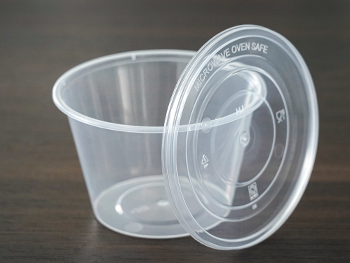
Clear Thickened Disposable Plastic 500 Round Bowl: A Complete Industry Guide
A clear thickened disposable plastic 500 round bowl is a transparent, circular food packaging container with a nominal capacity of approximately 500 milliliters. It is typically manufactured from food-grade polypropylene (PP) through injection molding or thermoforming, a process that yields consistent wall thickness, a smooth interior finish suitable for direct food contact, and a precise rim geometry that supports secure lid engagement. The “thickened” designation distinguishes this bowl from standard lightweight disposable tableware: the wall gauge is deliberately increased to deliver greater resistance to deformation, improved load-bearing capacity during stacking, and enhanced durability throughout filling, transport, and end use. The “round” geometry distributes stress evenly across the circumference, supports efficient nesting before filling, and enables stable vertical stacking once lidded.
The 500 ml capacity occupies a practical middle position in the disposable packaging market. It is larger than small condiment or sample cups but smaller than full meal buckets. This size aligns closely with side dishes, individual desserts, small salads, soups, ice cream portions, and meal-prep components, making it a versatile standard for foodservice operators, catering companies, deli counters, dessert shops, and meal preparation services . While classified as disposable, the thickened construction means many units are reused by consumers and operators for secondary storage, extending product lifecycle and influencing purchasing decisions.
The dominant material for clear thickened 500 round bowls is virgin polypropylene. PP offers a balance of optical clarity, structural rigidity, thermal stability, and food-contact safety that suits both hot-fill and cold-display applications. Food-grade grades must comply with established regulatory frameworks, such as FDA 21 CFR 177.1520 in the United States or EU Regulation No. 10/2011 for plastic food-contact materials . These standards govern allowable monomers, additives, and migration limits to ensure no harmful substances transfer into food under intended use conditions. Materials should be BPA-free and non-toxic, with no odor transfer that could affect the taste of packaged food .
Clarity in PP is achieved through controlled polymerization and the use of clarifying agents, but the thickened wall introduces a manufacturing trade-off: increasing wall thickness generally reduces transparency unless resin formulation and mold design are optimized. High-quality clear thickened bowls therefore rely on clarified PP resin and precision tooling to preserve visual inspection capability while delivering the durability that thinner containers lack. Transparency serves functional purposes beyond aesthetics. Operators can verify fill levels, check for foreign matter, confirm product color consistency, and inspect for separation without opening the lid, reducing contamination risk and inspection time in production and receiving environments. The crystal-clear body also enhances presentation for colorful desserts, layered salads, and fruit preparations, a significant advantage for takeout dessert shops and display counters .
For cold applications, some manufacturers offer polyethylene terephthalate (PET) variants that provide superior clarity and rigidity, though PET has lower heat resistance and is generally not suitable for microwave use. The majority of thickened 500 round bowls intended for hot-fill, reheating, or broad temperature versatility remain PP-based. Industry specifications for PP bowls in this category commonly cite a temperature tolerance ranging from approximately −20°C to +120°C, accommodating freezer storage, refrigeration, and microwave reheating with the lid removed . Thickened PP construction resists bending, cracking, and deformation during bulk handling, stacking, and transport, and can withstand vertical pressure without breaking in high-volume environments .
Visual Quality Control and Product Presentation. The clear body enables immediate inspection of contents at every stage: receiving, inventory counts, quality audits, and point of sale. In food production, this visibility supports batch consistency checks and rapid identification of defects. In retail and dessert settings, transparency enhances shelf appeal and gives customers confidence in product freshness and composition. In industrial sub-packaging, it allows quick detection of color changes, phase separation, or particulate contamination without disturbing the container .
Structural Durability and Load Performance. Thickened walls resist cracking, denting, and deformation during stacking, palletizing, and transport. Thin disposable bowls may buckle under the weight of dense foods or during compression in a delivery cart; a thickened 500 round bowl maintains its shape when filled with heavy salads, grain-based sides, or thick sauces. Reinforced rib structures and uniform wall thickness contribute to stability on conveyor systems and in cold-chain storage . The round geometry further helps by distributing compressive loads evenly around the circumference rather than concentrating stress at corners.
Temperature Versatility. Food-grade PP bowls in this category typically perform across a range of approximately −20°C to +120°C, accommodating freezer storage, refrigeration, and microwave reheating (often with the lid removed). This range covers the full cold-chain-to-consumer pathway for prepared sides, deli items, and takeaway desserts. It also supports hot-fill operations where product is packaged at elevated temperature and then rapidly chilled .
Sealing and Leak Resistance. While lid design varies by manufacturer, the 500 round format commonly pairs with snap-fit or press-fit lids that provide a secure seal for transport. Leak-resistant performance is a critical purchase criterion for foodservice operators, particularly for liquid-containing items such as soups, sauces, dressings, and marinated products. Matching transparent lids provide good sealing to prevent leakage during transportation . Integrated leak-proof base designs and smooth inner walls prevent seepage of sauces and wet foods, eliminating spills during delivery or serving .
Nesting and Space Efficiency. Empty bowls nest within one another, reducing warehouse and transport volume before filling. Once filled and lidded, bowls can typically be stacked several high depending on lid design and load weight, optimizing refrigerated display space, delivery cart configurations, and retail shelving. Stackable designs can support up to thirty layers in storage, saving valuable back-of-house space .
The following parameters represent typical ranges for clear thickened disposable plastic 500 round bowls available in the packaging market. Actual dimensions, weights, and performance figures vary by manufacturer and mold design, so buyers should verify against individual supplier technical data sheets.
Nominal capacity typically falls at 500 milliliters, though slight variations exist depending on fill line and headspace conventions. Some manufacturers list 500 ml bowls with dimensions of approximately 11.5 cm top diameter by 6.6 cm height, with 1,000 units per carton for bulk supply . The material is most commonly food-grade virgin polypropylene, BPA-free and non-toxic, with PET offered for cold-use applications. Color is clear or transparent, with some suppliers offering white, black, or custom color options for the bowl body and transparent lids for visibility .
Wall thickness for thickened grades is noticeably greater than thin-wall disposable bowls, with common specifications around 0.6 mm for standard duty and 0.8 mm for heavy-duty use . Temperature resistance for PP versions spans approximately −20°C to +120°C, with PET versions limited to cold use. Lid types include snap-fit, press-fit, and transparent dome lids, with some formats offering vented lids for microwave steaming or anti-fog properties for chilled display. PP versions are generally microwavable with the lid removed, and both PP and PET versions are suitable for freezer storage. Polypropylene carries resin identification code number five and is mechanically recyclable where infrastructure exists. Food-contact compliance typically references FDA 21 CFR 177.1520, EU Regulation No. 10/2011, LFGB, or equivalent national standards, with virgin material preferred for direct food contact .
These specifications are indicative and intended for general guidance. Dimensional tolerances, impact strength, and seal performance should be confirmed through sampling and trial runs under expected conditions.
Foodservice Takeaway and Delivery. The 500 ml capacity aligns with side dishes, small salads, soups, noodle toppings, and individual dessert portions. The clear body allows delivery operators and consumers to confirm order accuracy without breaking the seal, reducing complaint rates and handling time. Thickened walls protect contents during transport and resist leakage under vibration and tilting .
Catering and Buffet Service. Caterers use this format for portioned sides, desserts, composed salads, and cold appetizers where visual presentation matters. The thickened construction supports stacking on buffet lines and transport in insulated carriers, and the clear body allows staff to monitor remaining quantities at a glance.
Dessert Shops and Cafés. The high-transparency body makes colorful fruit salads, layered jelly, milk pudding, mousse, and ice cream look attractive, a significant advantage for takeout dessert businesses seeking to impress customers. Stain-resistant smooth surfaces do not absorb grease or sauce, and bowls can be briefly reused after a quick wash without retaining food odor .
Deli and Supermarket Counters. Clear round bowls suit cold prepared foods such as marinated olives, antipasti, gourmet salads, and chilled desserts. Product visibility enhances shelf appeal and customer confidence, while the secure lid supports self-service and grab-and-go formats.
Meal Preparation and Home Storage. Meal-prep services and home cooks use these bowls for portioned ingredients, overnight oats, small salads, and freezer meals. The durability of thickened PP makes them suitable for repeated secondary use, and their stackability supports refrigerator and pantry organization.
Industrial and Chemical Sub-packaging. Beyond food, clear thickened PP bowls are used for small-quantity distribution of coatings, adhesives, cleaning concentrates, and other non-food materials where content visibility is valued. Food-grade certification is not required for these applications, though the same PP material may be used. Compatibility with the specific chemical contents should always be verified.
Polypropylene is one of the more widely recycled plastics, designated as resin code number five in international recycling systems. Clear PP bowls can be mechanically recycled into new plastic products, though the infrastructure for collecting small-format food containers varies significantly by region. From a lifecycle perspective, the thickened wall represents a higher material input per unit than thin-walled alternatives, but this must be weighed against the reduced product loss and spoilage enabled by durable, leak-resistant packaging. The reusability of thickened bowls for secondary storage further offsets material intensity by extending service life beyond the first use cycle.
Some manufacturers offer bowls produced from post-consumer recycled PP for non-food applications, though recycled content is generally not used for direct food-contact products unless specific safety certifications and migration testing are met. The industry trend toward lightweighting—reducing wall thickness while maintaining performance—competes with the demand for durability that drives the thickened segment. Buyers should consider end-of-life pathways in their target market and specify recycled content only where it is compatible with the intended use and regulatory framework.
Buyers specifying clear thickened 500 round bowls should confirm several criteria before procurement. First, verify food-contact compliance documentation if the intended use involves edible products. Virgin PP with appropriate migration testing is the standard expectation, and suppliers should provide declarations of compliance referencing the relevant regulatory framework . Second, confirm lid compatibility and conduct fill-and-ship trials under expected temperature and stacking conditions. Lid seal performance varies by design and is not determined solely by bowl thickness, so real-world testing is essential. Third, assess clarity requirements carefully. Not all thickened PP achieves equal transparency, and visual inspection needs should be matched to resin grade and mold quality. Fourth, evaluate dimensional consistency and nesting performance across batches, since variation in rim diameter or taper angle can disrupt automated filling and denesting equipment. Fifth, consider end-of-life pathways in the target market and whether recycled content is acceptable for the intended application.
Packaging performance should also be validated against the specific product being filled: acid content, fat content, alcohol presence, and fill temperature all influence material compatibility and seal integrity. For chemical and industrial uses, chemical resistance charts and compatibility testing with the actual formulation are recommended before committing to a container specification.
This guide provides general industry information and does not endorse specific suppliers, brands, or products. Specifications, regulatory references, and performance claims should be validated against current technical data sheets, certificates of compliance, and applicable legal requirements for each use case and market.

This website uses cookies to ensure you get the best experience on our website.

 Español
 Pусский
 العربية
 Tiếng Việt

 WhatsApp
 Phone
 E-mail
 Message