
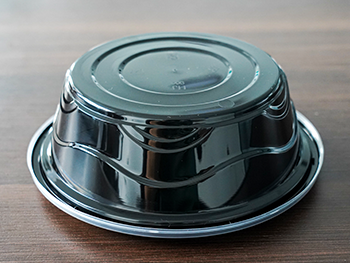
American Style 700 Black Thickened Disposable Plastic Round Container: A Comprehensive Industry Guide
Introduction to the American Style Round Container Category
The American style 700 black thickened disposable plastic round container represents a distinct segment within the broader foodservice packaging market. Characterized by its round geometry, dark pigmentation, and reinforced wall construction, this container format is engineered for operators who prioritize presentation, structural integrity, and compatibility with automated handling systems. Unlike standard translucent deli containers that prioritize visual product inspection, the black thickened variant serves a dual purpose: it conceals minor surface scratches that accumulate during bulk transport while projecting a more premium aesthetic for takeout and delivery applications. The 700ml capacity—approximately equivalent to 24 fluid ounces—positions this container as an ideal single-serving vessel for soups, noodle dishes, rice bowls, and composed salads. In the context of American-style foodservice, the round configuration is particularly valued for its uniform heat distribution during microwave reheating and its ability to interface seamlessly with standard cup holders and delivery bag inserts.
Material Composition and Thickening Technology
The foundational material for this container category is food-grade polypropylene (PP), specifically virgin PP resin that meets FDA and EU food contact safety standards. Polypropylene is selected for its favorable balance of rigidity, heat resistance, and cost efficiency. The “thickened” designation refers to a deliberate increase in wall thickness relative to conventional disposable containers, typically achieved through enhanced vacuum-forming or injection-molding parameters that distribute material more evenly across the base and sidewalls. Industry data indicates that thickened PP containers can exhibit 30% to 170% greater wall thickness than regular alternatives, translating to a 27% to 200% improvement in load-bearing capacity . For a 700ml round container, this reinforcement is critical: a filled container of soup or stew can exceed 800 grams, and the base must resist bowing or cracking when stacked two or three units high in a delivery bag. The black pigment itself is typically a food-safe carbon-based masterbatch compounded into the resin before forming. This coloration serves a practical function beyond aesthetics: it masks stains from turmeric, tomato-based sauces, and dark soy, which can make translucent containers appear unhygienic after handling. The exterior surface is usually smooth and non-absorbent, resisting grease transfer and maintaining a clean appearance throughout the delivery chain .
Structural Advantages of the Thickened Round Format
The round shape of the 700ml container offers several engineering advantages over rectangular or square alternatives. First, the absence of corners eliminates stress concentration points where cracks typically initiate during demolding, packing, and transport. Second, the circumferential wall distributes internal pressure evenly, which is particularly important when the container is filled with hot liquid that generates steam pressure. The thickened sidewall resists the outward bulging that can compromise lid engagement in thinner containers. Third, the round rim geometry accommodates a continuous sealing groove on the lid, enabling a more uniform and reliable closure. Industry sealing performance standards for thickened containers require that the lid-to-body interface show no visible gaps under visual inspection, withstand a water-tilt test without leakage for one to two minutes, and maintain seal integrity through temperature cycling from -20°C to 80°C for at least 100 cycles . In practical terms, a properly sealed thickened round container can be inverted and shaken vigorously without releasing soup or oil—a critical performance threshold for delivery operations where containers are subjected to sudden braking and bumpy roads. The load-bearing capability of thickened containers in this class is typically rated for vertical pressures of 5kg or more without deformation, allowing for stable palletization and shelf storage .
Lid Compatibility and Sealing Mechanisms
The lid system for the 700ml American style round container is a critical component of its overall performance. Most thickened variants employ a friction-fit lid with a full-circle groove that snaps over the container rim, creating a mechanical interference seal. Some premium configurations incorporate a locking buckle or tab design that provides tactile confirmation of closure and resists accidental opening during handling. The lid material is often polyethylene (PE) rather than PP, because PE offers greater flexibility and crack resistance at the thin gauges used for lids . This material pairing—rigid PP body with compliant PE lid—is a standard industry solution for achieving reliable sealing without requiring excessive force to open. Ventilation is another consideration: some lids feature a tiny vent hole designed to release excess steam from hot foods, preventing condensation from accumulating on the lid underside and dripping back onto the contents . For operators filling containers with soups or stews at temperatures above 85°C, the vent also reduces the pressure differential that can cause lid doming or partial disengagement. However, vented lids are not suitable for all applications; containers intended for freezer storage or transport of low-viscosity liquids may require unvented lids to prevent leakage.
Capacity and Dimensional Specifications
The 700ml capacity designation is a nominal volume, and actual usable capacity depends on fill line and headspace requirements. In the American style round container format, 700ml corresponds to approximately 24 fluid ounces, a size that is widely recognized in the foodservice industry as a standard single-portion soup or entrée container. For context, the 24oz deli container format typically measures approximately 116mm in top diameter with a height that varies by manufacturer but generally falls in the range of 100mm to 110mm for the body . The thickened variant may have slightly larger external dimensions due to the increased wall gauge, but the lid interface diameter remains standardized to ensure compatibility with existing lid inventories. It is important to note that “700ml” is often used interchangeably with “24oz” in supplier catalogs, though the precise metric conversion (700ml = 23.67 US fl oz) means that a container labeled as both may have a usable capacity slightly below a true 24oz fill. For operators portioning by volume, this distinction is minor but worth verifying with actual fill tests. The base diameter is typically slightly smaller than the rim diameter to allow nesting of empty containers, and the stack height per nested unit is a function of the taper angle and wall thickness. Thickened containers generally nest less tightly than thin-wall alternatives, which reduces the number of units per shipping carton but improves denesting performance on automated lines.
Performance in Thermal Applications
Polypropylene’s thermal properties make the 700ml thickened round container suitable for a range of temperature exposures. The material softens at approximately 120°C to 130°C, which means it can safely hold hot soups and stews filled at temperatures up to about 100°C without deformation, provided the fill is not boiling when introduced . Microwave reheating is a common use case: the container can withstand repeated heating cycles of two to three minutes at high power, though longer exposure or heating of oil-rich foods can cause localized softening. For freezer applications, PP remains ductile at temperatures down to -20°C, resisting the brittleness that affects polystyrene and some PET formulations . This dual-range thermal capability—microwave safe and freezer safe—is a significant operational advantage for meal prep and central kitchen models, where containers are filled, chilled or frozen, transported, and then reheated at the point of sale or consumption. The black pigment does not significantly affect thermal performance, though black containers may absorb radiant heat more readily than white or translucent ones if exposed to direct sunlight during transport, a minor consideration for outdoor delivery scenarios.
Aesthetic and Functional Role of Black Coloration
The decision to specify black rather than translucent or white for a thickened round container is driven by several converging factors. From a presentation standpoint, black provides high visual contrast against light-colored foods such as rice, mashed potatoes, and cream-based soups, which can enhance perceived portion size and food visibility through a clear lid if one is used. More commonly, black containers are paired with black or clear lids for a monochromatic, modern appearance that aligns with the visual identity of many fast-casual and delivery-first restaurant brands. Functionally, black hides the yellowing and staining that PP containers can develop after microwave exposure, extending the apparent service life of reusable-intended units and maintaining a cleaner appearance for single-use applications. The pigment also conceals minor scuffs and abrasion marks that occur during bulk handling, which are more visible on glossy white or transparent surfaces. From a light-protection perspective, opaque black walls shield photosensitive food components—certain vitamins, pigments, and fats—from UV and visible light degradation during display or transport, though this is a secondary benefit relative to the primary drivers of aesthetics and stain masking.
Operational and Environmental Considerations
The thickened construction of the 700ml black round container introduces a trade-off between durability and material consumption. A thicker container uses more resin per unit, which increases the embodied energy and carbon footprint on a per-unit basis. However, industry analysis suggests that the durability improvement can reduce replacement frequency and leakage losses, potentially offsetting the increased material input over the lifecycle of use . For single-use foodservice, the primary environmental lever is not thickness but end-of-life management: PP is technically recyclable (resin code 5), but in practice, post-consumer food containers are frequently contaminated with food residue and are not accepted in many municipal recycling streams. Some manufacturers offer thickened containers formulated with biodegradable additives or produced from post-consumer recycled PP, though the availability and performance of these variants vary by region. Operators evaluating the environmental profile of this container format should consider not only the material weight but also the practical outcomes: a thickened container that prevents leakage reduces the need for secondary absorbent pads, outer bags, and replacement meals, all of which carry their own environmental costs. From a labor perspective, the rigid walls of the thickened container facilitate faster filling and lid application on manual lines compared to flimsy alternatives that collapse under light pressure.
Quality Control and Compliance Standards
Containers in this category intended for the North American and European markets should be supported by documentation demonstrating compliance with relevant food contact regulations. In the United States, this typically means FDA 21 CFR compliance for polypropylene articles, including migration testing for the specific black pigment used. In the European Union, the relevant framework is EU 10/2011 on plastic materials and articles intended to come into contact with food, with specific migration limits for constituents and colorants. LFGB testing is commonly cited for the German market . Beyond material compliance, dimensional tolerances matter for automated filling and lidding equipment: industry norms for vacuum-formed containers specify size tolerances within ±1mm and weight tolerances within ±1% . Thickened containers may exhibit slightly wider tolerance bands than precision injection-molded alternatives, but the vacuum-forming process used for most food containers in this class is capable of holding tolerances adequate for manual and semi-automated operations. Sealing integrity should be validated through the water-tilt and pressure tests described earlier, and operators receiving shipments should conduct incoming inspection on a sample basis to verify lid fit and wall uniformity.
Market Context and Application Fit
The 700ml American style black thickened round container occupies a specific niche in the disposable foodservice packaging landscape. It is not the lowest-cost option per unit—regular-weight translucent containers typically cost significantly less—but it is positioned for applications where failure carries a higher cost than the container itself. Delivery-only restaurant concepts, ghost kitchens, and catering operations that transport food over distances are the primary adopters, because a single leaked container can result in a refund, a negative review, and a lost customer. The black color and round shape are also favored by brands that present composed bowls—poke, grain bowls, pho, ramen, and specialty soups—where the container is visible to the consumer upon opening and contributes to the unboxing experience. In the broader disposable food container market, demand is being shaped by the expansion of food delivery platforms and the persistence of takeout culture, with growth concentrated in formats that solve specific operational pain points rather than simply providing a vessel . The thickened black round container addresses two such pain points—leakage and presentation—and its continued adoption reflects a market willingness to pay a modest premium for reliability in these dimensions.
Summary
The American style 700 black thickened disposable plastic round container is a purpose-built foodservice packaging format that prioritizes structural integrity, sealing reliability, and visual presentation. Its PP construction with increased wall gauge delivers measurable improvements in load-bearing capacity and leak resistance compared to standard containers, while the black pigmentation serves both aesthetic and stain-concealing functions. The 700ml capacity aligns with single-serving entrée and soup applications, and the round geometry facilitates uniform microwave heating and stable stacking. Operators selecting this format should verify food contact compliance documentation, conduct incoming seal checks, and confirm that the thermal profile of their specific menu items falls within the container’s safe operating range. As delivery and takeout continue to account for a growing share of foodservice volume, thickened round containers in this class represent a practical response to the operational demands of transport, handling, and consumer expectation.

This website uses cookies to ensure you get the best experience on our website.

 Español
 Pусский
 العربية
 Tiếng Việt

 WhatsApp
 Phone
 E-mail
 Message