
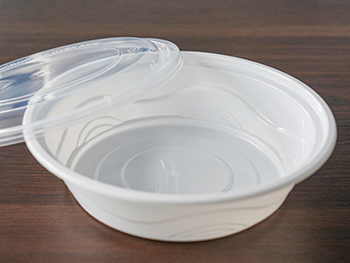
American Style 700ml White Thickened Disposable Plastic Round Container: The Complete Industry Guide
Across the wide spectrum of single-use food packaging, the American style 700ml white thickened disposable plastic round container occupies a uniquely important place. It delivers a generous single-serve portion, an elegant opaque white body that presents hot and cold dishes beautifully, and a thickened construction that withstands the rigors of delivery, catering, and everyday service. Because the white base is so often paired with a clear snap-on lid, it offers the best of both worlds: a clean, brandable presentation on the bottom and full visibility of the food on top.
This guide is a neutral, industry-wide reference. It defines the product, explains its materials and manufacturing, details its practical advantages, lists the standard specifications you should expect, and provides a clear framework for selecting the right quality — all without endorsing any particular brand or supplier.
The American style 700ml white thickened disposable plastic round container is a single-use food packaging vessel characterized by four defining features:
700ml nominal capacity. The "700ml" designation refers to the nominal fill volume, roughly equivalent to 24 fluid ounces. This is a medium single-serve portion, ideally suited to entrees, rice and noodle bowls, side dishes, desserts, soups, and grab-and-go meals. It sits between smaller 450–500ml bowls and larger 900ml–1200ml basins, making it a versatile middle-ground size for daily takeout and event service.
White, opaque body. Unlike fully transparent containers, the white body is molded from opaque, food-grade resin. The clean white finish provides a premium, restaurant-quality appearance, acts as a neutral backdrop that makes food colors stand out, and offers an ideal surface for logo printing and branding.
Round body shape. The circular profile distributes internal space evenly, allows empty containers to nest inside one another for compact storage, and is comfortable for both servers and diners to hold.
Thickened walls. As with other "thickened" products in the category, the side walls and base use a heavier material gauge than standard thin-wall bowls. This adds structural rigidity, resists crushing and deformation in transit, and produces a sturdier, more premium feel in the hand.
The "American style" descriptor reflects a design language and quality standard associated with North American foodservice: reinforced walls, a reliable snap-fit lid, and a clean, functional form engineered for high-volume takeout, delivery, and catering.
The performance of this container depends on the raw material, the molding process, and the pigments used to achieve its signature white color.
Most containers in this category are manufactured from food-grade polypropylene (PP), a thermoplastic polymer prized for clarity, toughness, chemical resistance, and heat tolerance. For white containers, food-grade PP provides:
A wide temperature tolerance, roughly from -20°C to 120°C, allowing the container to move from freezer to microwave safely.
Chemical inertness, so the material does not react with oils, acids, or moisture and does not alter the taste or odor of food.
Lightweight strength, reducing shipping costs and easing handling without sacrificing durability.
Recyclability, with PP widely collected in many plastic recycling programs when clean and properly disposed of.
The opaque white color is achieved by adding food-safe titanium dioxide pigment to the resin during compounding. Approved food-contact pigments produce a bright, consistent, uniform white without affecting the safety or performance of the container. The pigment is fully encapsulated in the polymer matrix, so it does not leach into food and does not fade, chip, or peel during normal use.
While the body is white, the matching lid is most commonly clear. This combination is deliberate: the clear lid showcases the food on top while the white base provides a clean, premium presentation and a surface for branding. Clear lids are typically molded from the same food-grade PP resin, offering the same temperature and safety performance as the body.
The thickened walls are produced through injection molding, where molten resin is injected under high pressure into a steel mold and cooled into shape. Compared with thinner thermoformed products, injection-molded thickened walls deliver:
Greater rigidity that resists bending and collapse under stacked weight.
A reinforced rim that holds the lid securely.
A smooth, uniform surface free of weak points.
Improved resistance to cracking or shattering when dropped.
The white finish also benefits from injection molding, which produces a glossy, even, scratch-resistant surface that holds up well to handling and transport.
Why do restaurants, caterers, hotels, and retailers consistently choose this format? The advantages span presentation, durability, economics, and customer experience.
The white body delivers a distinctly upscale appearance that plain clear or black containers do not. A white base makes vibrant food colors pop, reads as clean and hygienic, and looks at home in everything from fine-casual dining to office catering. For operators serving hot entrees, desserts, or prepared foods, the white container elevates perceived quality before the lid is even opened.
Because the body is opaque and smooth, it is an excellent canvas for logo printing, custom branding, and marketing messages. Restaurants and catering companies can reinforce their brand on every meal, turning a simple container into a portable advertisement. Many manufacturers support printing options such as flexographic, offset, or pad printing in custom colors.
The thickened walls provide the structural integrity that thin containers cannot match. During delivery — where packages are stacked, jostled, and exposed to heat and moisture — a rigid white container resists deformation, while a properly seated leak-proof lid prevents spillage. This reduces food waste, protects delivery bags, and lowers the risk of customer complaints.
A food-grade PP white thickened container is engineered for the full temperature journey: refrigerated storage, freezing, and microwave reheating. Operators can pre-portion meals, freeze them for later use, and reheat them directly in the same container. This versatility makes the format a favorite for meal-prep programs, hotel banquets, and institutional foodservice.
Round containers are designed to nest (stack inside one another when empty) for compact storage, and to stack securely when filled and lidded. This maximizes storage space, keeps the back-of-house tidy, and supports stable, space-efficient packing in delivery crates and service carts.
A properly fitted clear lid creates an effective barrier against air and moisture. This retains the original flavor, aroma, and texture of food, extends shelf life for prepped ingredients, and keeps contents fresh — a measurable benefit for meal-prep and grab-and-go programs.
As a single-use product, the container eliminates washing, sanitizing, and reusable-inventory management. Each unit is clean and ready to use, supporting high food-safety standards and reducing labor. The 700ml size also provides a consistent portion standard, simplifying costing, inventory, and menu pricing while delivering a satisfying portion to the customer.
The following ranges represent common, industry-standard values for this product type. Exact figures vary by manufacturer, so always confirm the specification sheet of the specific product you evaluate.
Capacity: 700ml nominal, with a fill-to-brim volume typically reaching roughly 105% of the nominal figure.
Diameter (top): Approximately 150–175mm, depending on the mold design.
Height: Approximately 55–70mm, varying with the depth profile (shallow for salads and desserts, deeper for soups and entrees).
Wall thickness: Thickened construction generally ranges from roughly 0.5mm to 1.2mm on the side walls and base — markedly heavier than standard thin-wall bowls.
Material: Food-grade polypropylene (PP), colored with food-safe white pigment.
Color: Opaque white body with a clear lid as standard; black and custom-color bases are available in some product families.
Temperature range: Approximately -20°C to 120°C for PP; safe for refrigeration, freezing, and microwave reheating. Confirm microwave suitability on the product label, as not all lids are microwave-safe.
Lid: A matching clear snap-fit lid, many with a tamper-evident or tear-away tab indicating whether the container has been opened.
Unit weight: A thickened 700ml PP container with lid typically weighs in the range of 18–40 grams, reflecting the heavier gauge.
Printing: The opaque white body supports custom logo and branding printing; confirm available printing methods with the manufacturer.
Certifications: Reputable products carry food-contact safety certifications relevant to their target markets, such as FDA compliance for the US market and EU food-contact compliance for Europe.
Packaging: Bulk-packed, commonly supplied in cartons with multiple units per inner polybag or sleeve for hygiene and ease of dispensing.
The versatility of the American style 700ml white thickened disposable plastic round container makes it suitable across nearly every segment of the food industry.
The white container is a premium choice for restaurant takeout and third-party delivery. Hot entrees, rice and noodle bowls, stews, curries, and combo meals travel safely in a rigid, leak-resistant container that keeps the dish looking polished on arrival.
Caterers and hotels favor the white format for its clean, elegant appearance. Boxed lunches, plated servings, buffet items, and event meals all benefit from a presentation that reads as refined and professional. The uniform portion size and stackable design simplify service at corporate lunches, weddings, and large functions.
Meal-prep brands, hospitals, and institutional kitchens rely on this container for its ability to hold a full portion, survive freezing, and reheat in the microwave. The opaque body also provides a neutral, appetizing backdrop for a wide range of dishes.
Soups, stews, pasta, rice bowls, and other hot comfort foods are a natural fit. The leak-proof seal and thickened walls handle liquid-rich dishes, while the white base keeps the presentation clean and appetizing.
The 700ml white container works well for desserts, puddings, fruit cups, and bakery items. The clean white background highlights the color of the dessert, making it an attractive choice for patisseries, cafes, and dessert shops.
Grocery delis, convenience stores, and grab-and-go counters use white round containers for prepared foods, rotating specials, and meal kits. The premium appearance supports higher perceived value, and the food-safe material meets retail food-safety standards.
For office lunches and corporate catering, the white container provides a professional, presentable package that reinforces a quality brand impression — a meaningful advantage in business settings where presentation matters.
Because the category includes a wide range of quality levels, it is essential to evaluate specific products against clear criteria rather than assuming all "thickened" white containers perform identically.
Verify food-grade material and certifications. Confirm the container is molded from food-grade PP with food-safe pigment and carries the relevant food-contact certifications for your market. This is non-negotiable for safety and compliance.
Check the wall thickness and rigidity. Hold the container and apply light pressure. A genuine thickened container should resist flexing and return to shape without distortion. Compare the stated gram weight across suppliers to gauge material usage.
Assess the white finish and consistency. Look for a bright, uniform white with no streaks, patches, or discoloration. The surface should be smooth, glossy, and free of defects, as the white body is a primary presentation feature.
Evaluate the lid seal. The lid is the most common point of failure. Look for a clean, positive snap-fit, a secure perimeter seal, and — where required — a tamper-evident or tear-away feature. For liquid-heavy use, prioritize models with proven leak resistance.
Confirm temperature compatibility. If you reheat food in the microwave, verify that both the container and the lid are microwave-safe and within the stated temperature range. Not all lids are designed for reheating.
Test stacking and nesting. In your own operation, confirm that filled containers stack stably and that empty units nest tightly for space-efficient storage.
Evaluate printing options. If branding matters to you, confirm that the manufacturer supports the printing method and colors you need on the opaque white surface, and request printed samples before committing.
Request samples before bulk purchase. Always test samples under real conditions — fill with a typical portion, lid it, and subject it to a simulated delivery or cold-chain scenario — before committing to volume.
Even a durable food-grade container performs best when handled correctly.
Microwave usage. Follow the manufacturer's guidance. Reheat in short intervals, leave a vent or loose lid opening where steam buildup could occur, and never use a container with a metal component.
Freezer usage. The container is suitable for freezing within the stated temperature range. Leave a small amount of headspace for foods that expand when frozen, and avoid sudden extreme temperature shocks wherever possible.
No use with metal or heat sources. These plastic containers are not designed for ovens, grills, open flames, or hot oil. They are intended for storage, transport, and microwave reheating only.
Single-use purpose. Dispose of the container after use. It is not intended for repeated dishwashing cycles; reuse may reduce its integrity over time.
Recycling and disposal. Where recycling infrastructure exists, clean PP containers can be diverted from landfill. Check local recycling guidelines, separate lids where appropriate, and rinse containers of food residue before recycling.
As the foodservice industry moves toward more responsible packaging, the white thickened round container category is evolving alongside it. Key trends include:
Recycled-content options. Post-consumer recycled PP (rPP) versions are increasingly available, reducing reliance on virgin resin.
Lighter-weight innovation. Manufacturers are refining mold design to reduce material usage while retaining the rigidity, leak resistance, and white finish customers expect.
Lid and body separation for recycling. Clear lids and white bodies can often be separated for more efficient material recovery.
Clear labeling. Clearer disposal and recycling instructions help consumers and businesses make better end-of-life decisions.
Operators committed to sustainability can pursue recycled-content variants, work with suppliers that publish material disclosures, and integrate these containers into a broader waste-reduction strategy.
The American style 700ml white thickened disposable plastic round container is more than a disposable bowl — it is a premium, durable, brandable packaging solution engineered for the realities of modern foodservice. Its thickened walls deliver the rigidity that thinner products lack, its opaque white body provides a clean, upscale presentation and a surface for branding, and its food-grade PP construction supports the full journey from cold storage to microwave reheating.
For restaurants, caterers, hotels, meal-prep services, and retailers alike, this format combines durability, hygiene, portion control, and premium aesthetics into a single, cost-effective package. When selecting a product, prioritize verified food-grade material, genuine wall thickness, a consistent white finish, a secure lid, and certifications relevant to your market — and always validate performance with samples before scaling up.
Whether you are stocking a commercial kitchen, preparing for a large catered event, or launching a grab-and-go program, the 700ml white thickened round container is a reliable, industry-proven choice that balances function, quality, and value.

This website uses cookies to ensure you get the best experience on our website.

 Español
 Pусский
 العربية
 Tiếng Việt

 WhatsApp
 Phone
 E-mail
 Message