
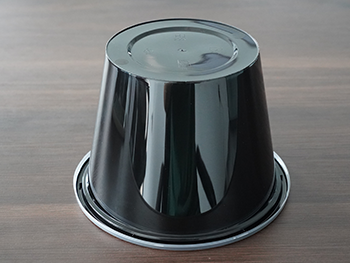
Black Thickened Disposable Plastic 2000 Round Bucket: Complete Industry Guide
Meta Description: Discover the definition, advantages, material specifications, and industrial applications of black thickened disposable plastic 2000 round buckets. A comprehensive B2B reference for food service, catering, and packaging professionals seeking reliable bulk packaging information.
The black thickened disposable plastic 2000 round bucket has become a familiar sight across commercial kitchens, catering operations, industrial facilities, and agricultural settings. This packaging format combines the convenience of single-use design with structural characteristics that allow it to perform in demanding environments where standard thin-wall disposables would fail. Understanding what distinguishes this bucket from ordinary disposable containers requires an examination of its material composition, manufacturing methods, functional design elements, and the specific operational needs it addresses.
In the world of bulk packaging, the 2000 round bucket occupies a middle ground between small portion containers and large industrial drums. Its nominal capacity of approximately 2000 milliliters—equivalent to two liters—makes it suitable for holding meaningful quantities of liquids, semi-solids, and dry goods without becoming unwieldy for manual handling. The round cross-section provides uniform strength distribution around the circumference, facilitates efficient nesting and stacking, and allows compatibility with a wide range of lid formats available across the industry.
The "thickened" designation separates this product category from standard disposable buckets that prioritize minimal material usage. Thickened walls and reinforced structural elements are engineered to resist deformation under load, reduce cracking during transport, and provide a level of rigidity that end users associate with durability and reliability. The black color serves both functional and aesthetic purposes, offering light-blocking properties for photosensitive contents while creating a uniform, professional appearance suitable for front-of-house service environments.
This guide provides industry-general information on definitions, material specifications, advantages, applications, selection considerations, and frequently asked questions. It is intended for procurement professionals, operations managers, packaging engineers, and business owners seeking to understand this product category without reference to specific manufacturers or suppliers.
The term "2000 round bucket" in commercial packaging typically refers to a cylindrical container with a nominal capacity of approximately 2000 milliliters, or two liters. The round descriptor specifies the circular cross-section that distinguishes it from square, rectangular, or oval containers. Round buckets offer several inherent advantages: uniform wall stress distribution under internal pressure, efficient nesting when empty, stable stacking when filled, and compatibility with standard lid designs that rely on circular sealing geometry.
It is important to note that "2000" may function as a model or series number rather than a strict volume designation in some product lines. Procurement teams should always verify the actual stated capacity on specification sheets rather than relying on the product name alone. Overrun capacity—the volume to the brim—typically exceeds nominal capacity by ten to fifteen percent, providing practical headspace for filling operations and content expansion.
The "thickened" descriptor indicates that the bucket walls, rim, and base are engineered with greater material thickness than standard disposable containers in the same size class. This thickening is achieved through several manufacturing approaches. The first involves increased wall gauge during injection molding, producing a denser and more rigid finished product. The second involves geometric reinforcement—thickening specific high-stress areas such as the upper rim where lids attach and the base where impact forces concentrate during handling. Some manufacturers combine both approaches to optimize strength while managing material costs.
Because "thickened" is not a standardized industry term, buyers should request actual wall thickness measurements in millimeters and compare them against load requirements rather than relying on marketing language. A bucket described as thickened by one manufacturer may have different dimensions than a similarly described product from another source.
Disposable indicates that the bucket is designed for single-use applications and is not intended for repeated washing and reuse in food-contact scenarios. However, disposable does not mean flimsy or non-recyclable. Thickened disposable buckets made from polypropylene or high-density polyethylene are technically recyclable where facilities accept rigid plastics. Some manufacturers offer versions with post-consumer recycled content for non-food applications. The disposable format eliminates washing labor, water consumption, and the risk of residual contamination from incomplete sanitation—advantages that matter greatly in high-turnover operations such as festivals, food trucks, and temporary kitchens.
Black thickened disposable round buckets are predominantly manufactured from two thermoplastic polymers: polypropylene and high-density polyethylene.
Polypropylene (PP) is favored for food service applications because of its higher temperature tolerance, typically up to one hundred to one hundred twenty degrees Celsius for food-grade grades. This makes PP buckets suitable for hot-fill operations involving sauces, soups, and freshly cooked preparations. PP also offers greater rigidity and a more premium feel than HDPE, which end users often interpret as higher quality. The material is microwave-safe at moderate power levels when explicitly approved by the manufacturer.
High-density polyethylene (HDPE) offers superior impact resistance at low temperatures, making it the preferred choice for chilled or frozen content handling. HDPE buckets resist cracking when dropped or subjected to rough handling in cold environments. The material has a lower heat tolerance than PP, typically around eighty degrees Celsius, and should not be used for hot-fill applications or microwave reheating.
Both polymers are available in food-contact grades that must be free from bisphenol A and compliant with relevant regulatory frameworks. Industry-standard certifications referenced by manufacturers include FDA regulations in the United States, LFGB requirements in Germany, and ISO22000 food safety management standards. For non-food applications such as paints, adhesives, lubricants, and cleaning chemicals, the material may be virgin or recycled PP, with colorants added for opacity and ultraviolet stabilization.
Manufacturers achieve the thickened designation through two principal methods. Injection molding with increased wall thickness produces a denser, more rigid bucket capable of withstanding stacking pressure without ovalizing—the tendency of a round container to distort into an oval shape under vertical load. This distortion is a common failure mode in thin-wall buckets stacked several units high, leading to lid separation and content loss.
The second method involves reinforced rim and base geometry. A thickened upper rim interlocks more securely with lids and resists deformation during handling. A reinforced base absorbs impact energy during drops and rough transport. Many quality manufacturers combine increased wall gauge with geometric reinforcement, optimizing strength where it matters most while managing overall material consumption and cost.
Black pigmentation is introduced via masterbatch during the molding process. Carbon-black-based colorants are common due to their low cost and excellent ultraviolet absorption, which extends the bucket's functional life if exposed to incidental sunlight during transport, outdoor events, or agricultural field use. The uniformity of the black finish is a quality indicator—streaking, swirling, or uneven dispersion suggests inadequate mixing or low-grade masterbatch. In food-contact applications, the carbon black used must meet purity requirements and be covered by the relevant regulatory declaration of compliance.
The opacity provided by black pigmentation serves functional purposes beyond aesthetics. Light-sensitive contents—certain dairy products, edible oils, fermented foods, and a range of industrial chemicals—benefit from protection against photo-degradation. In professional kitchens, black buckets support color-coding systems where different colors designate specific allergen categories, cleaning chemicals, or waste streams, reducing cross-contamination risks.
The primary advantage of a thickened wall is resistance to deformation under load. Standard disposable buckets may bulge, crack, or ovalize when filled with dense liquids or stacked several units high. A thickened two-liter bucket maintains dimensional stability, allowing taller pallet stacks in warehouse storage and reducing product loss from structural failure during distribution. For catering operations, this translates to fewer leaks during vehicle transport and greater confidence when pre-portioning sauces, soups, and bulk ingredients for off-site service.
The reinforced rim contributes to stack stability by mating with the base of the bucket above. This interlocking geometry prevents lateral shifting during transport and allows stable stacking without auxiliary packaging materials. The practical result is more efficient use of vehicle space and warehouse racking, reducing logistics costs per unit.
The opaque black construction prevents light penetration, which is critical for contents prone to photo-degradation. Ultraviolet and visible light can accelerate spoilage in certain dairy products, degrade the potency of edible oils, and alter the flavor profile of fermented or cultured foods. In industrial settings, light-sensitive chemical formulations benefit from the same protection. The light-blocking property is inherent to the carbon-black pigmentation and does not require additional coatings or liners.
Black containers have become standard in commercial catering and event service because they provide a neutral, upscale appearance that contrasts well with colorful foods. The uniform black finish maintains a professional look even if the exterior becomes smudged or scuffed during transport—an advantage over white containers that show marks readily. More practically, black supports color-coding systems in professional kitchens and industrial facilities, where consistent color assignment helps prevent cross-contamination between allergens, chemicals, and waste streams.
Round buckets with tapered walls nest efficiently when empty, reducing storage volume in their unused state. When filled, the thickened rim design creates a stable interlock between stacked units. The two-liter size occupies a practical middle ground: large enough to hold meaningful quantities for bulk preparation and service, yet small enough to remain manageable for single-person lifting and pouring. This ergonomic consideration matters in busy kitchens where staff handle dozens of containers during a shift.
While reusable containers dominate long-term storage applications, the disposable format eliminates washing labor, water consumption, energy costs, and the risk of residual contamination from incomplete sanitation. For high-turnover operations such as festivals, food trucks, temporary kitchens, and pop-up events, the disposable two-liter bucket offers a hygienic, cost-predictable solution that reduces labor overhead and simplifies inventory management. The predictable per-unit cost also aids budgeting and pricing decisions.
The following parameters represent common industry ranges for 2000-milliliter round plastic buckets. Exact figures vary by manufacturer and product line, and buyers should confirm specific values against product data sheets.
Nominal capacity is typically stated as 2000 milliliters, equivalent to two liters. Actual overrun capacity to the brim is usually ten to fifteen percent higher, providing practical headspace for filling and content expansion. Top diameter generally falls between 150 and 170 millimeters, while height ranges from approximately 130 to 160 millimeters, depending on the taper angle and base design.
Material is polypropylene or high-density polyethylene, with PP offering a temperature range of approximately minus twenty to one hundred twenty degrees Celsius and HDPE offering approximately minus thirty to eighty degrees Celsius. Wall thickness for thickened grades is manufacturer-specific but is typically ten to twenty percent greater than standard thin-wall buckets in the same size class.
Lid compatibility includes snap-on, tamper-evident, and friction-fit formats, with tamper-evident lids providing visible confirmation that contents have not been accessed. Optional handle configurations include molded plastic grips and metal wire bail handles for heavier contents. Food-contact compliance is indicated by FDA, LFGB, or equivalent certification when specified by the manufacturer.
The most visible application for black thickened two-liter buckets is in commercial food service. They are used for pre-portioning sauces, marinades, dressings, and bulk ingredients in central kitchens before distribution to satellite locations. Catering operations use them for service-line holding of sides, salads, and condiments. The disposable format is particularly valued at temporary events where dishwashing infrastructure is absent or impractical. The black color provides a uniform, professional appearance suitable for front-of-house buffets and service stations.
In delivery-focused food businesses, two-liter round buckets with secure lids serve as bulk packaging for family-sized portions of soups, stews, noodles, and rice dishes. The round shape facilitates even heat distribution and fits some vehicle cup-holder systems. The thickened walls resist crushing during transport, protecting contents from deformation. The black finish maintains a professional appearance even after handling by multiple parties in the delivery chain.
Beyond food, thickened black polypropylene buckets are used for packaging and dispensing paints, adhesives, lubricants, and cleaning concentrates. The opacity protects light-sensitive formulations, and polypropylene's chemical resistance accommodates a broad range of solvents and aqueous solutions. For these applications, food-grade certification is not required, and manufacturers may offer recycled-content versions that reduce material costs and environmental impact.
In agricultural settings, two-liter buckets serve as measuring and dispensing vessels for liquid fertilizers, pesticides, and animal feed supplements. The black color is standard for ultraviolet-sensitive agrochemicals, and the thickened wall resists cracking from incidental impact in field conditions. The integrated handle formats allow convenient carrying across uneven terrain.
When specifying black thickened disposable 2000 round buckets, procurement teams should evaluate several factors to ensure the product meets operational requirements.
Lid integrity is paramount. A bucket is only as secure as its lid. Tamper-evident lids provide visible confirmation that contents have not been accessed, which is essential for food safety compliance and for products with tampering risk. Snap-on lids must be tested for fit consistency across production lots to prevent leakage during transport.
Temperature exposure must be confirmed against the intended use. Polypropylene offers broader heat tolerance for hot-fill and microwave applications, while high-density polyethylene offers better cold-impact performance for chilled and frozen contents. If the bucket will be used for hot-fill above eighty degrees Celsius, verify that the grade is suitable and that the lid material matches the thermal expansion characteristics of the bucket body.
Stacking load requirements should be assessed against available compression test data. Thickened walls improve stack strength, but the limiting factor is often the lid rather than the body. If buckets will be stacked more than three units high in storage or transport, specify a heavy-duty lid with a reinforced center panel or request compression test results.
Food contact documentation is essential for food applications. Obtain a declaration of compliance confirming that the finished article meets the relevant regulatory framework—Regulation No 10/2011 in the European Union or FDA 21 CFR in the United States. Certifications should cover the colorant as well as the base polymer.
Sustainability profile is increasingly important to buyers. Polypropylene and high-density polyethylene buckets are technically recyclable where facilities accept rigid plastics. Some manufacturers offer buckets with up to sixty percent post-consumer recycled content for non-food applications, reducing carbon footprint without compromising structural performance.
Is a 2000-milliliter bucket the same as a two-liter bucket?
Yes. In metric packaging nomenclature, 2000 milliliters and two liters are equivalent. However, some manufacturers use model numbers that do not directly correspond to capacity. Always verify the stated volume on the specification sheet.
Can black thickened buckets be microwaved?
Only if the manufacturer explicitly states microwave suitability. Polypropylene is generally microwave-safe at moderate power levels, but the black colorant and any ultraviolet stabilizers may affect heat absorption. High-density polyethylene should not be microwaved. For food service applications involving reheating, confirm microwave approval in writing.
What is the difference between thickened and heavy-duty?
These terms are not standardized. Thickened typically refers to increased wall gauge relative to a manufacturer's standard line. Heavy-duty may refer to a combination of wall thickness, reinforced rim geometry, and higher-density resin. Request actual wall thickness measurements and compare against load requirements rather than relying on marketing descriptors.
Are black buckets food-safe?
Food safety depends on the base resin and the colorant, not the color itself. Carbon black used in food-contact grades must meet purity requirements. Always specify food-grade certification when the bucket will contact edible products. Industrial-grade black buckets may use colorants not approved for food contact.
Can these buckets be reused?
While designed for single-use, thickened polypropylene buckets can often be hand-washed and reused for non-critical applications such as storage of dry goods, tools, or cleaning supplies. Repeated washing may scratch the interior surface, creating harborage points for bacteria if reused for food. Reuse decisions should be based on a hygiene risk assessment.
What lid types are available?
Common lid formats include snap-on lids for general containment, tamper-evident lids with breakaway tabs for food safety compliance, and friction-fit lids for dry goods. Some manufacturers offer lids with pour spouts or vent holes for specific applications. Lid material should match the bucket material for consistent thermal expansion behavior.
The black thickened disposable plastic 2000 round bucket occupies a practical niche in bulk packaging. It is substantial enough to handle demanding transport and stacking conditions, economical enough to be discarded after use, and functionally designed with opacity and structural reinforcement for professional environments. For B2B buyers in food service, catering, industrial supply, and agriculture, specifying the correct material grade, lid format, and regulatory compliance is essential to realizing the format's full operational benefits.
As with any packaging component, performance depends less on the category name than on the specific resin, wall gauge, and quality control standards applied during manufacturing. Procurement teams should request detailed specifications, verify certifications, and test samples under realistic conditions before committing to volume purchases. The information in this guide provides a foundation for those evaluations, covering industry-general definitions, material properties, advantages, applications, and selection criteria without reference to specific suppliers or brands.

This website uses cookies to ensure you get the best experience on our website.

 Español
 Pусский
 العربية
 Tiếng Việt

 WhatsApp
 Phone
 E-mail
 Message