Login | Register
产品中心
Home > Products > Disposable Plastic Round Bucket > White Thickened Disposable Plastic 2000 Round Bucket

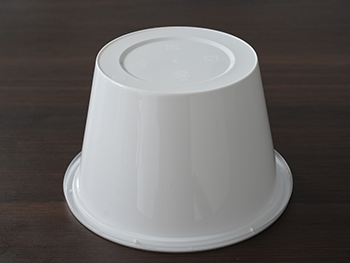
White Thickened Disposable Plastic 2000 Round Bucket

White Thickened Disposable Plastic 2000 Round Bucket

White Thickened Disposable Plastic 2000 Round Bucket.png


White Thickened Disposable Plastic 2000 Round Bucket: The Complete Industry Guide


Meta Description: Discover everything about the white thickened disposable plastic 2000 round bucket — its definition, materials, key specifications, advantages, common applications, food-safety compliance, sustainability considerations, and a practical buying guide. Pure industry information with no brand recommendations, built for SEO and ready for blogs, catalog pages, and industry directories.

Introduction: What Is a White Thickened Disposable Plastic 2000 Round Bucket?

A white thickened disposable plastic 2000 round bucket is a single-use, cylindrical (round) plastic container with a nominal capacity of 2000 milliliters (2 liters / 2L), molded from extra-thick plastic walls for enhanced rigidity and durability during storage, transport, and handling. The "2000" in the product name refers to its 2000 ml nominal volume, while "round" describes its circular cross-section that optimizes structural strength and stacking behavior. "Thickened" indicates a heavier wall thickness and gram weight than standard thin-wall disposable pails, and "white" refers to the white colorant (typically titanium dioxide) compounded into the resin.
This product occupies a prominent place in the disposable packaging and foodservice container categories. Its bright, neutral white appearance is strongly associated with hygiene, cleanliness, and food-grade applications, making it one of the most widely specified round buckets for foodservice, catering, dairy, bakery, paints, and general-purpose industrial use. Because it is designed for one-time or limited-cycle use, it delivers the convenience of disposable packaging while retaining much of the strength of a reusable pail. This guide provides a comprehensive, brand-neutral overview of the product's definition, specifications, advantages, applications, compliance, and selection criteria — ideal material for SEO content on blogs, catalog pages, and industry directories.

Keyword-Rich Key Features at a Glance

  • Disposable plastic bucket — designed for single-use and limited-use cycles, minimizing cleaning and return logistics.

  • Thickened walls — extra-heavy-duty gauge that resists cracking, puncturing, and deformation.

  • 2000 ml round bucket — a 2-liter nominal capacity with a round body for uniform stress distribution.

  • White plastic pail — bright, opaque surface associated with hygiene and food-safe presentation.

  • Food-grade options — widely available in virgin, food-contact-approved resins.

  • Stackable and nestable — designed for space-efficient storage and transport.

  • Multi-closure compatibility — works with snap lids, plug lids, friction-fit lids, and tamper-evident seals.

  • Excellent label and print contrast — a clean white surface displays labels, codes, and branding clearly.

  • Cost-effective bulk packaging — competitive per-unit pricing in carton or shrink-wrap quantities.


Materials and Manufacturing: What Is a Thickened Plastic Bucket Made Of?

Primary Resins: HDPE and PP

Most white thickened disposable plastic buckets are molded from one of two commodity thermoplastics:
  • High-Density Polyethylene (HDPE) — the most common material for round buckets and pails. HDPE offers excellent chemical resistance, impact strength, moisture resistance, and food-contact approval. It remains ductile even in cold environments, making it ideal for chilled foods, dairy, paints, and industrial liquids.

  • Polypropylene (PP) — stiffer and more heat-resistant than HDPE, with a higher melting point. PP buckets suit hot-fill applications, higher-temperature contents, and applications requiring greater rigidity.

How "Thickened" Is Achieved

The "thickened" property is the result of three design factors:
  1. Greater wall thickness — typically measured in millimeters (mm) or mils; thickened buckets often exceed 1.0–1.5 mm in the sidewall and 2.0 mm or more in the base.

  1. Higher gram weight — a heavier finished part (for example, 120–180 g for a 2L pail) indicates more resin per unit and greater stiffness.

  1. Ribbing and base geometry — reinforced side ribs, reinforced chime/rim, and a sturdy bottom ring distribute load and prevent collapse under stacking.

The Role of White Pigment in a White Plastic Pail

The white color is achieved by adding titanium dioxide (TiO₂) pigment to the resin masterbatch. This is not merely cosmetic:
  • Hygienic appearance — the bright white surface signals cleanliness and is strongly preferred in food, dairy, bakery, and healthcare-adjacent applications.

  • Opacity — a properly pigmented white bucket obscures contents while allowing for easy visual level inspection at the rim.

  • Visibility and inspection — white surfaces make product level, contamination, and residue easier to see, supporting quality control during filling and use.

  • Label contrast — a clean white background delivers high contrast for most label colors, barcodes, and printed information, improving scan rates and readability.

  • Temperature and UV — white reflects more light and heat than darker colors, which can help keep contents cooler in direct sunlight, though it offers less UV shielding than carbon-black pigmented buckets.

Virgin vs. Recycled Material

Buckets are available in virgin-grade (food-contact compliant, highest clarity of certification) and recycled-grade versions. Virgin HDPE or PP is strongly preferred for food, cosmetics, and pharmaceutical applications, and is essential where a consistent white appearance matters. Recycled material often has a gray or off-white cast that is harder to keep bright, so white buckets intended for premium or food use typically require virgin resin. Always confirm the specific resin, grade, and color consistency with the supplier's technical data sheet.

Complete Specifications and Dimensions (Typical Range)

While exact dimensions vary by manufacturer, the following represent typical industry ranges for a 2000 ml white thickened round bucket. These are guideline figures, not a fixed standard, and should be verified against the product's specification sheet.
  • Nominal capacity: 2000 ml (2.0 liters / approximately 67.6 US fluid ounces / 70.4 UK fluid ounces)

  • Body shape: Round / cylindrical with a slightly tapered or straight sidewall

  • Wall thickness: Approximately 1.0–1.5 mm sidewall; thicker base for load bearing

  • Approximate dimensions: Top diameter ~165–175 mm; bottom diameter ~135–150 mm; height ~170–190 mm (range varies by design)

  • Empty weight: Approximately 100–180 grams depending on material and thickening level

  • Lid types: Snap-on lid, plug/friction lid, or glued lid; some versions accept tamper-evident bands

  • Closure diameter: Rim/chime diameter matched to the matching lid size (commonly ~160–170 mm)

  • Stacking: Stackable with reinforced rim; nestable (tapered) versions for space saving

  • Temperature range: Typically -20°C to +60°C for HDPE (higher for PP), depending on formulation

  • Food contact: Optional FDA / EU food-contact-compliant grades

  • Color consistency: White buckets should be checked for batch-to-batch whiteness (ΔE color difference) to avoid visible variation in branded or retail packaging

Because "2000" in the product name may also be used by some suppliers as a model/catalog code rather than a volume, always confirm whether the number refers to milliliters, a model series, or a SKU before ordering.

Advantages of Using a White Thickened Disposable Plastic 2000 Round Bucket

  1. High Strength with Low Weight

The thickened walls give this disposable bucket surprising rigidity and puncture resistance, allowing it to hold dense, heavy, or semi-liquid contents without bowing, cracking, or leaking — while remaining light enough for easy manual handling and economical freight.
  1. Hygiene-First Appearance

The bright white surface is universally associated with cleanliness and food safety. In foodservice, dairy, bakery, and catering, a white bucket reassures customers and inspectors alike, and simplifies the visual presentation of bulk ingredients.
  1. Cost-Effective Disposability

As a disposable plastic bucket, it eliminates the costs and labor of cleaning, sanitizing, and returning reusable containers. For businesses with high turnover or hygiene-critical operations, single-use economics are often far more attractive.
  1. Excellent Chemical and Moisture Resistance

HDPE and PP provide broad resistance to water, most diluted acids and alkalis, and many solvents. This makes the 2000 ml round bucket suitable for paints, adhesives, cleaning agents, and other demanding contents.
  1. Superior Label and Code Legibility

The clean white surface provides high contrast for labels, barcodes, batch codes, and printed graphics, improving scan reliability, brand presentation, and compliance documentation.
  1. Easy Visual Inspection

White walls make it easy to check fill level, detect residue, and spot contamination at a glance — an advantage in quality-controlled food and industrial processes.
  1. Stackability and Space Efficiency

Reinforced rims allow filled buckets to be stacked safely, while tapered or nestable designs let empty buckets nest inside one another — dramatically reducing warehouse space and return/transport volume.
  1. Versatile Sealing Options

Compatibility with snap, plug, and tamper-evident lids gives users flexible closure choices — from secure leak-resistant lids for liquids to airtight lids that prolong shelf life.
  1. Predictable, Consistent Quality

Mass production delivers consistent wall thickness, dimensions, weight, and color from batch to batch, supporting reliable filling, capping, labeling, and stacking on automated lines.

Common Applications and Use Cases

The white thickened disposable plastic 2000 round bucket serves a wide range of industries, with particular strength in food and hygiene-sensitive segments. Common applications include:

Foodservice and Catering

  • Bulk condiments, sauces, dressings, pickles, and marinades

  • Catering supplies, deli products, and prepared food portions

  • Bakery and confectionery ingredients and icings

Dairy and Beverage

  • Bulk milk, cream, and cultured dairy products in food-grade formats

  • Juice concentrates and beverage syrups

  • Yogurt and dessert bases

Paints, Coatings, and Adhesives

  • Paint, primer, sealant, and adhesive dispensing

  • Mixing and batch containers on-site

  • Sample and test quantities

Chemicals and Industrial

  • Cleaning chemicals, degreasers, and diluted solutions

  • Lubricants, coolants, and process liquids

  • Non-hazardous industrial intermediates

Agriculture and Horticulture

  • Fertilizer solutions, plant nutrients, and seed treatments

  • Feeding and watering containers on small farms

  • Garden and nursery mixing pails

Janitorial and Facility Management

  • Mopping and floor-cleaning buckets

  • Carpet and surface cleaning solutions

  • Maintenance and wash-down operations

Household and DIY

  • Home storage, DIY projects, painting, and cleaning tasks

  • Garden watering and composting

  • General-purpose utility buckets


White vs. Black Buckets: Choosing the Right Color

Because the previous product category in this series is the black variant, a direct comparison is useful for buyers deciding between colors:
  • Hygiene perception and food appeal — white strongly signals cleanliness and is preferred in foodservice, dairy, bakery, and retail-facing settings; black offers discretion and a more industrial look.

  • UV shielding — black (carbon-black pigmented) buckets block UV light more effectively, protecting light-sensitive chemicals and coatings; white reflects heat but provides less UV shielding.

  • Visibility and inspection — white walls make fill level, residue, and contamination easier to see; black hides contents and residue from view.

  • Label and print contrast — white provides high contrast for most colors and barcodes; black requires light or metallic inks for legibility.

  • Recycled-content compatibility — black hides the color variation of recycled resin; white requires cleaner, more consistent feedstock and often virgin resin to stay bright.

Choose white when food presentation, hygiene signaling, or label legibility is paramount; choose black when UV shielding or disguise of recycled content matters more.

Disposable vs. Reusable Plastic Buckets: A Practical Comparison

Choosing between disposable and reusable pails depends on your operation. Key trade-offs include:
  • Hygiene: Disposable buckets remove cleaning and sanitization burdens, ideal for food and healthcare-adjacent settings where cross-contamination is a concern.

  • Total cost: For low volumes or irregular demand, disposables avoid the inventory, cleaning, and return logistics of reusables. For very high, continuous throughput, reusable pails may amortize their higher purchase cost.

  • Environmental footprint: Single-use plastic requires responsible disposal or recycling. Reusable pails reduce per-use material consumption but add water, energy, and chemical use during cleaning.

  • Strength: Reusable pails are often heavier gauge, but a thickened disposable bridges the gap with extra rigidity at a disposable price point.

The thickened disposable category is specifically engineered to capture most of the strength of a reusable pail while retaining the convenience and hygiene of a single-use container.

Food Safety, Quality, and Compliance Considerations

When sourcing a white thickened disposable plastic bucket for food or regulated applications, verify the following:
  • Food-contact compliance — confirm the resin is approved for food contact under the relevant jurisdiction (e.g., FDA 21 CFR for the U.S., EU Regulation 10/2011 for Europe) and that the product carries the appropriate declaration or test report.

  • Virgin vs. recycled content — food-contact grades generally require virgin resin; recycled content is typically restricted to non-food uses.

  • No heavy-metal pigments — the white colorant (titanium dioxide) should be food-safe and free from restricted heavy metals.

  • Migration and odor — ask for migration testing and sensory (taste/odor) results if the bucket will hold foods with sensitive flavor profiles.

  • Color consistency — for branded or retail packaging, confirm batch-to-batch whiteness to avoid visible shade variation.

  • Labeling — check for correct volume marking, recycling codes (e.g., #2 HDPE or #5 PP), and any required compliance statements.

  • Load and stacking ratings — confirm the bucket's fill weight, stacking height, and temperature ratings match your application.

Always request the manufacturer's technical data sheet, material safety data sheet (MSDS/SDS), and test certificates before committing to a regulated application.

Sustainability and End-of-Life Management

Disposable plastic packaging carries environmental responsibilities. Consider these points for responsible use of the white thickened plastic 2000 round bucket:
  • Recyclability: HDPE (#2) and PP (#5) are widely recyclable in many regions. Clean, empty buckets can often enter curbside or commercial recycling streams — check local rules. White buckets can actually sort more reliably in optical recycling systems than heavily pigmented dark colors.

  • Waste reduction: Buying in bulk, right-sizing volume, and using nestable designs reduce packaging waste per unit of product.

  • Reuse opportunities: Although designed as disposable, thickened buckets are durable enough for limited reuse in non-food settings such as gardening, storage, or workshop tasks.

  • Recycled content: Where permitted, choose buckets with verified post-consumer recycled content to lower virgin-resin demand — though note that food-grade white buckets typically require virgin resin.

  • Disposal compliance: Follow local regulations for disposal, especially if the bucket has contained chemicals — residual materials may classify the container as regulated waste.

Sustainability claims (such as "recyclable," "compostable," or "recycled content") should always be verified against independent certifications and local infrastructure, not assumed.

Labeling, Printing, and Decoration Options

Clear, durable labeling is essential for compliant and marketable packaging. The white plastic pail surface supports several decoration methods, with excellent contrast for most inks:
  • In-mold labeling (IML) — a label is molded into the wall during production, producing a smooth, durable, peel-resistant graphic that survives handling and moisture.

  • Shrink sleeves — full-coverage sleeves provide large print areas, tamper evidence, and 360-degree branding, ideal for retail-facing products.

  • Self-adhesive labels — the most flexible option, allowing short-run or variable information such as batch codes, dates, and compliance text.

  • Direct printing / flexography — cost-effective for simple, repetitive branding and product identification, and especially legible on a white base.

  • Hot-stamping and embossing — premium decorative options for upscale or specialty products.

On a white surface, virtually any ink color delivers high contrast, simplifying brand design and improving barcode scan rates. Always confirm that any inks, labels, and adhesives are compliant with food-contact or chemical-compatibility requirements when the bucket will hold regulated contents.

Handling, Storage, and Logistics Best Practices

Proper handling extends the usefulness of a disposable thickened bucket and prevents damage during transport and storage:
  • Fill weight — stay within the bucket's rated fill weight and leave appropriate headspace for liquids that may expand with temperature change.

  • Sealing — always match the correct lid to the rim size and seat it fully to achieve the advertised leak resistance.

  • Stacking — align stacked buckets vertically and avoid exceeding the recommended stack height to prevent base collapse.

  • Temperature — keep filled buckets within the material's operating temperature range; extreme heat can soften HDPE, and extreme cold can increase brittleness.

  • Nesting empty buckets — tapered buckets nest tightly; separate them carefully to avoid vacuum-locking when unnesting.

  • Palletization — use stable, stretch-wrapped pallets with consistent layer patterns for safe, economical freight.

  • Cleanliness — for food applications, store buckets in clean, dry conditions and avoid exposure to dust, pests, and direct sunlight before use.

Following these practices reduces breakage, leakage, and waste across the supply chain.

Global Market and Industry Trends

The market for disposable plastic pails and buckets is shaped by several converging trends that buyers should be aware of:
  • Growth in e-commerce and home delivery — rising online grocery and food delivery has increased demand for reliable, leak-proof, single-use food containers, including round buckets.

  • Focus on food-grade materials — heightened food-safety awareness is driving demand for clearly certified, food-contact-compliant white buckets in foodservice and retail.

  • Shift toward recycled content — consumer and regulatory pressure is driving manufacturers to incorporate post-consumer recycled (PCR) resin, especially in non-food industrial buckets.

  • Lightweighting vs. thickening — while many categories lightweight to cut plastic use, performance-critical applications favor thickened gauges for durability, creating a segmented market.

  • Circular-economy regulation — extended producer responsibility (EPR) schemes and plastic taxes in several regions are changing how disposable packaging is priced and collected.

  • Automation and filling-line compatibility — consistent dimensions, weight, and color are increasingly important as more operations adopt automated filling, capping, and palletizing.

These trends mean buyers should prioritize suppliers who can document material sourcing, recycled content, compliance, and dimensional and color consistency — not just lowest price.

Common Mistakes to Avoid When Buying Plastic Buckets

Even experienced buyers can misstep. Watch for these frequent errors:
  • Assuming "2000" means the same thing everywhere — always confirm whether it denotes milliliters, a model series, or a SKU, and request a dimensional drawing.

  • Ignoring the lid — a bucket without a compatible, correctly sized lid is useless; always order and test the complete closure system.

  • Mismatching wall thickness to application — a thin-wall bucket fails under heavy or stacked loads; a heavy-duty bucket overpays for light use.

  • Overlooking temperature and chemical compatibility — resin choice must match the actual contents and conditions.

  • Skipping compliance verification — for food, pharma, or regulated chemicals, a verbal assurance is not enough; require test reports and certifications.

  • Overlooking color consistency — for branded or retail white buckets, shade variation between batches can hurt presentation.

  • Forgetting stacking and logistics — warehouse and freight design depends on nesting, stack height, and pallet pattern.

  • Choosing price over consistency — inconsistent dimensions and weight disrupt automated lines and cause more cost than they save.

Avoiding these pitfalls ensures the bucket performs reliably and passes any required audits or inspections.

Frequently Asked Questions (FAQ)

Is the "2000" in "2000 round bucket" a volume or a model number?

In most cases it denotes a 2000 ml (2-liter) nominal capacity, but some suppliers use it as a catalog/model code. Always confirm the actual volume and dimensions with the supplier.

Can a white thickened disposable plastic bucket hold food?

Yes, if it is manufactured from food-contact-compliant virgin resin and carries the appropriate food-safety certification. White buckets are among the most common choices for foodservice and dairy applications. Always verify before use with food.

Why choose white over black or clear?

White provides a clean, hygienic appearance, high label contrast, and easy visual inspection, and it is strongly preferred in foodservice, dairy, and retail-facing applications. Black offers more UV shielding; clear allows full visibility of contents.

Is a "thickened" bucket reusable?

It is designed for single-use or limited-cycle use. While durable enough for light reuse (especially in non-food tasks), it is not intended to replace heavy-duty reusable industrial pails over long service lives.

Is the bucket recyclable?

HDPE (#2) and PP (#5) buckets are generally recyclable when clean and empty, but recyclability depends on local facilities and regulations. White buckets can sort more reliably in optical recycling systems than heavily pigmented dark colors.

What lid options are available?

Common options include snap-on lids, plug/friction lids, and tamper-evident lids, each offering different levels of leak resistance, re-sealability, and security.

Conclusion

The white thickened disposable plastic 2000 round bucket is a versatile, hygienic, cost-effective, and durable packaging solution that bridges the gap between fragile thin-wall disposables and expensive reusable containers. Its round, thickened HDPE or PP construction delivers strength, chemical and moisture resistance, stackability, and a clean, food-friendly white surface, while its disposable nature simplifies hygiene and logistics across foodservice, dairy, catering, paints and coatings, chemicals, agriculture, janitorial, construction, and household applications.
Whether you need a food-grade container for dairy or catering, a robust pail for industrial fluids, or a bright, presentable utility bucket for daily tasks, understanding the specifications, materials, compliance, and selection criteria outlined in this guide will help you choose the right product for your needs. As with all packaging decisions, verify the supplier's technical documentation, confirm food-contact and compliance status where relevant, and consider responsible disposal and recycling practices to minimize environmental impact.
This guide is provided as general industry information for educational and SEO purposes and does not endorse or recommend any specific manufacturer or brand.


ONLINE MESSAGE

Please fill in a valid email address
Captcha Can not be empty

RELATED PRODUCTS

No search results found!
chat

Online Customer Service

×

This website uses cookies to ensure you get the best experience on our website.

Accept Reject