
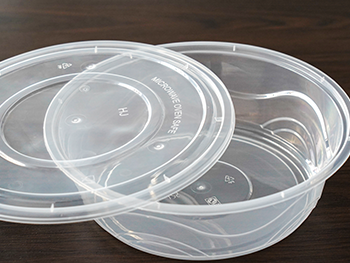
Clear Thickened Disposable Plastic 3000 Round Basin: A Complete Industry Guide
Clear thickened disposable plastic 3000 round basins represent a specialized category of industrial and commercial packaging and containment products designed for high-volume, single-use applications. These basins are manufactured from transparent, heavy-gauge plastic materials and are engineered to hold approximately 3000 milliliters (3 liters) of content, making them suitable for a wide range of food service, medical, laboratory, and industrial uses. The "round" designation refers to the circular cross-section of the basin, which provides uniform strength distribution and ease of stacking, while "clear" indicates the transparent nature of the material that allows visual inspection of contents without opening or disturbing the container.
The growing demand for clear thickened disposable plastic 3000 round basins reflects broader industry trends toward hygienic, cost-effective, and visually appealing containment solutions. Businesses across food processing, catering, healthcare, and scientific research sectors increasingly rely on these products because they combine the convenience of disposability with the durability of thickened plastic construction. Understanding the specifications, material properties, and application scenarios of these basins is essential for procurement professionals, product developers, and industry stakeholders seeking reliable containment solutions.
Clear thickened disposable plastic 3000 round basins are typically produced from food-grade or medical-grade polymers, with polypropylene (PP), polyethylene terephthalate (PET), and polystyrene (PS) being the most common base materials. Polypropylene offers excellent chemical resistance and thermal stability, making it suitable for hot-fill applications and microwave use in some formulations. PET provides superior clarity and rigidity, ideal for applications requiring high visual transparency. Polystyrene delivers excellent dimensional stability and cost efficiency for ambient-temperature applications.
The "thickened" characteristic distinguishes these basins from standard disposable containers. Thickened plastic construction typically involves wall thicknesses ranging from 0.8 millimeters to 2.5 millimeters, depending on the specific product grade and intended application. This increased material gauge provides enhanced structural rigidity, improved resistance to deformation under load, and greater durability during transportation and handling. Manufacturers achieve thickening through advanced thermoforming or injection molding processes that maintain material integrity while achieving precise dimensional tolerances.
Industry standards governing clear thickened disposable plastic 3000 round basins include FDA food-contact regulations in the United States, EU food-contact material regulations (EC 1935/2004), and various international standards for medical and laboratory-grade containers. Manufacturers typically certify their products for food contact safety, recyclability, and compliance with relevant health and safety directives. Understanding these standards helps buyers evaluate product quality and suitability for specific applications.
The advantages of clear thickened disposable plastic 3000 round basins span functional, economic, and operational dimensions. Transparency stands as a primary benefit, enabling users to inspect contents for quality, contamination, or fill level without opening the container. This visual verification capability reduces handling time, minimizes product waste, and supports quality control procedures in food service and manufacturing environments.
Structural strength represents another significant advantage. The thickened plastic construction provides superior load-bearing capacity compared to standard disposable basins, allowing for safe stacking, transportation, and storage of heavier or denser contents. This strength reduces the risk of cracking, splitting, or collapse during use, which is particularly important in commercial kitchens, medical facilities, and industrial settings where reliability is paramount.
Hygiene and contamination control are critical advantages of disposable basins. Single-use design eliminates cross-contamination risks associated with reusable containers, making these products ideal for healthcare, food processing, and laboratory applications where sterility and cleanliness are essential. The smooth interior surface of clear thickened plastic basins resists bacterial adhesion and facilitates complete content removal, supporting sanitation protocols.
Cost efficiency emerges as a practical advantage for high-volume operations. While thickened disposable basins carry a higher per-unit cost than thin-gauge alternatives, their durability reduces product loss and replacement frequency, delivering favorable total cost of ownership. Additionally, the lightweight nature of plastic reduces shipping costs and storage space requirements compared to glass or metal alternatives.
Environmental considerations increasingly influence product selection. Many clear thickened disposable plastic 3000 round basins are manufactured from recyclable polymers, and some producers offer products made from post-consumer recycled content. Understanding recyclability codes and local recycling infrastructure helps businesses make environmentally responsible choices while maintaining operational efficiency.
Clear thickened disposable plastic 3000 round basins typically feature a nominal capacity of 3000 milliliters, though actual brim capacity may range from 3200 to 3500 milliliters to accommodate filling tolerances and headspace requirements. The round configuration typically features a top diameter ranging from 180 to 250 millimeters, with depth dimensions between 100 and 150 millimeters, depending on the specific product design and stacking requirements.
Wall thickness specifications vary by product grade, with standard thickened basins measuring 1.0 to 1.5 millimeters and heavy-duty variants reaching 2.0 to 2.5 millimeters. Bottom thickness typically exceeds wall thickness by 20 to 40 percent to provide additional structural support and stability. Rim designs may include reinforced edges, stacking lugs, or sealing channels to enhance functionality and compatibility with lid systems.
Thermal performance characteristics depend on the base polymer. Polypropylene basins generally withstand temperatures from -20°C to 120°C, making them suitable for refrigeration, freezing, and hot-fill applications. PET basins perform optimally between -40°C and 70°C, while polystyrene basins are typically rated for -20°C to 70°C. Understanding these thermal limits helps users select appropriate products for their specific temperature requirements.
Chemical resistance profiles vary by material. Polypropylene demonstrates excellent resistance to acids, bases, and organic solvents, making it suitable for laboratory and industrial applications. PET offers good resistance to alcohols and mild acids but limited resistance to strong bases. Polystyrene provides moderate chemical resistance suitable for food service applications. Manufacturers typically provide chemical compatibility charts to guide product selection.
Load-bearing capacity represents a critical performance characteristic. Standard clear thickened disposable plastic 3000 round basins typically support static loads of 5 to 15 kilograms when properly supported, with heavy-duty variants supporting up to 25 kilograms. Stacking height recommendations usually limit stacked basins to 5 to 10 units to prevent deformation and ensure stability during storage and transportation.
Food service and catering operations utilize clear thickened disposable plastic 3000 round basins for food preparation, storage, display, and service. The transparency allows kitchen staff to identify contents quickly, while the thickened construction supports portioning, mixing, and temporary storage of ingredients. Catering businesses appreciate the professional appearance of clear basins for buffet displays and food presentation.
Healthcare facilities employ these basins for patient care, specimen collection, and medical waste management. The disposable nature supports infection control protocols, while the clear construction enables visual inspection of contents. Thickened walls provide the durability needed for bedside use and transportation within medical facilities.
Laboratory and research environments use clear thickened disposable plastic 3000 round basins for sample preparation, temporary storage, and waste collection. Chemical resistance and transparency make these basins suitable for a range of laboratory procedures, while disposability eliminates cross-contamination risks between experiments.
Industrial and manufacturing operations utilize these basins for parts handling, component storage, and process containment. The thickened construction withstands industrial environments, while transparency supports visual inspection and inventory management. Chemical resistance properties suit various manufacturing processes involving solvents, lubricants, and cleaning agents.
Agricultural and horticultural applications include seed handling, soil sample collection, and harvest storage. The durability of thickened basins supports field use, while transparency allows inspection of contents without opening containers.
Procurement of clear thickened disposable plastic 3000 round basins should consider relevant quality standards and regulatory compliance requirements. Food-contact applications require compliance with FDA 21 CFR 177 regulations in the United States, EU Framework Regulation EC 1935/2004, and equivalent standards in other jurisdictions. Medical applications may require compliance with ISO 13485 quality management standards and relevant medical device regulations.
Manufacturers typically provide certificates of analysis (CoA) documenting material composition, dimensional specifications, and performance test results. Third-party testing may verify compliance with migration limits, mechanical strength requirements, and thermal performance specifications. Buyers should request appropriate documentation to verify product suitability for their intended applications.
Environmental compliance considerations include recyclability codes, recycled content availability, and compliance with extended producer responsibility regulations. Many jurisdictions require labeling of plastic products with resin identification codes, and some markets increasingly demand products with verified recycled content or biodegradable characteristics.
Selecting appropriate clear thickened disposable plastic 3000 round basins requires careful evaluation of application requirements, material properties, and supplier capabilities. Key selection criteria include capacity requirements, thermal exposure, chemical compatibility, load-bearing needs, and regulatory compliance requirements.
Buyers should evaluate wall thickness specifications relative to intended use, with heavier gauges appropriate for demanding applications and standard gauges suitable for lighter-duty tasks. Rim design and lid compatibility should be assessed for applications requiring sealed containment. Stacking characteristics and storage efficiency considerations influence total operational costs.
Supplier evaluation should consider manufacturing capabilities, quality management systems, certification documentation, and supply chain reliability. Understanding lead times, minimum order quantities, and customization options helps align procurement with operational requirements. Sampling and testing before full-scale procurement reduces risk and ensures product suitability.
The environmental profile of clear thickened disposable plastic 3000 round basins involves considerations of material sourcing, manufacturing energy consumption, end-of-life management, and recyclability. Polypropylene and PET basins are widely recyclable through municipal recycling programs, while polystyrene recycling infrastructure varies by region. Buyers should understand local recycling capabilities and disposal options.
Reduced material consumption through optimized thickening represents a sustainability opportunity, balancing durability requirements with material efficiency. Some manufacturers offer products with reduced wall thickness achieved through advanced engineering, maintaining performance while minimizing material use. Recycled content availability continues to expand, with some producers offering basins made from post-consumer recycled polymers.
Life cycle assessment considerations include transportation efficiency (lightweight plastic reduces fuel consumption), product longevity (durable basins reduce replacement frequency), and end-of-life management (recyclability reduces landfill disposal). Businesses increasingly incorporate these factors into procurement decisions alongside cost and performance criteria.
Clear thickened disposable plastic 3000 round basins represent a versatile and practical containment solution across diverse industries. Understanding material properties, technical specifications, application requirements, and compliance considerations enables informed procurement decisions. As industries continue to prioritize hygiene, efficiency, and sustainability, these products evolve to meet changing requirements through material innovation and design optimization. Stakeholders who understand the full range of factors influencing product selection and performance can optimize their containment operations while meeting quality, safety, and environmental objectives.

This website uses cookies to ensure you get the best experience on our website.

 Español
 Pусский
 العربية
 Tiếng Việt

 WhatsApp
 Phone
 E-mail
 Message